The Alvea Blog
Study smarter — tips, learning science, and product news.
How to Prepare for Your First College Exam
Scout the format, calibrate your depth, and build a study system you can reuse all semester.
Does Rewriting Your Notes Actually Help You Study?
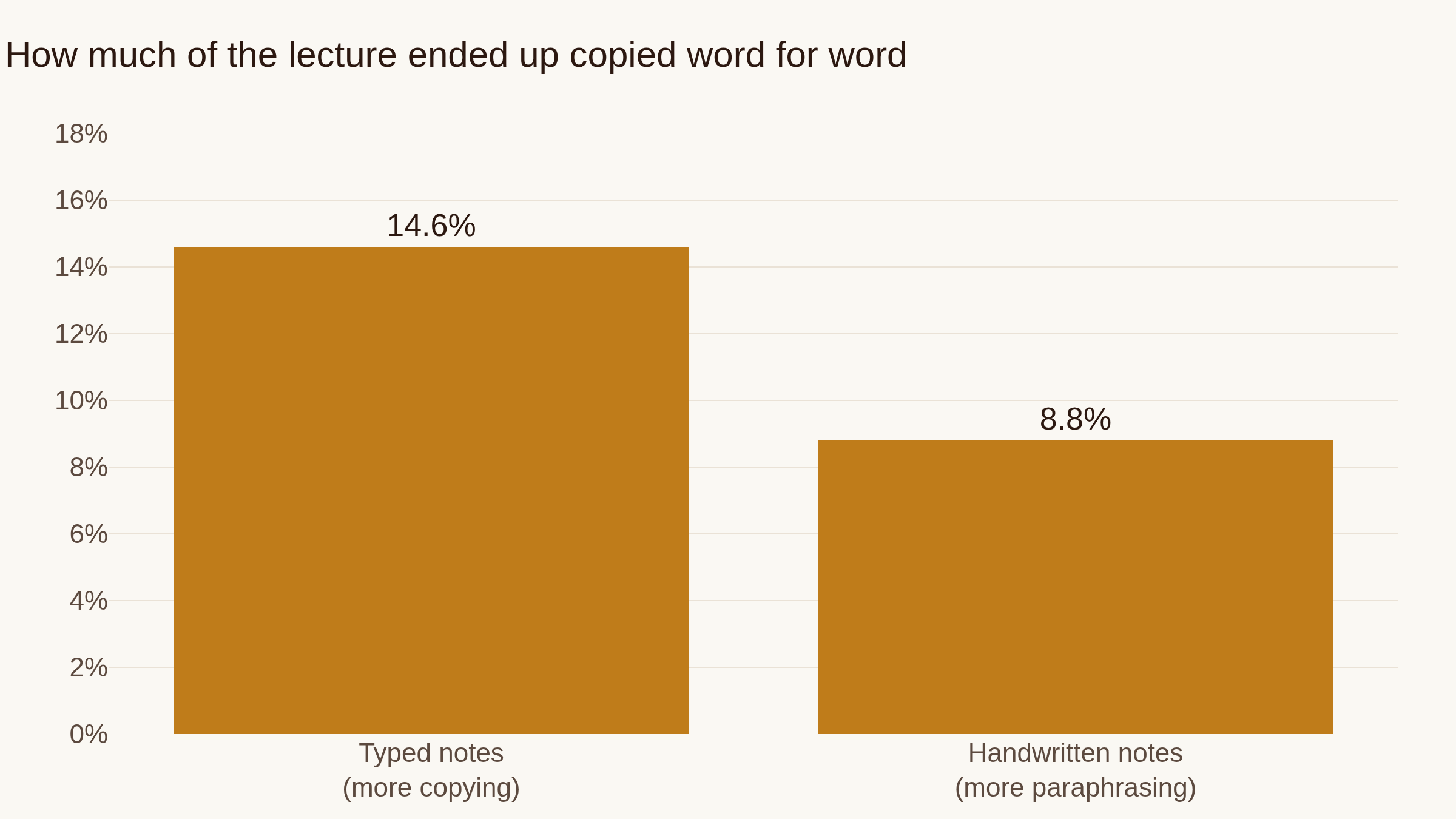
What learning science says about copying, condensing, and recalling your notes.
How to Study When You're Tired
Being tired knocks out one kind of studying and leaves another intact. The trick is knowing which is which.
How to Study for a Boring Class
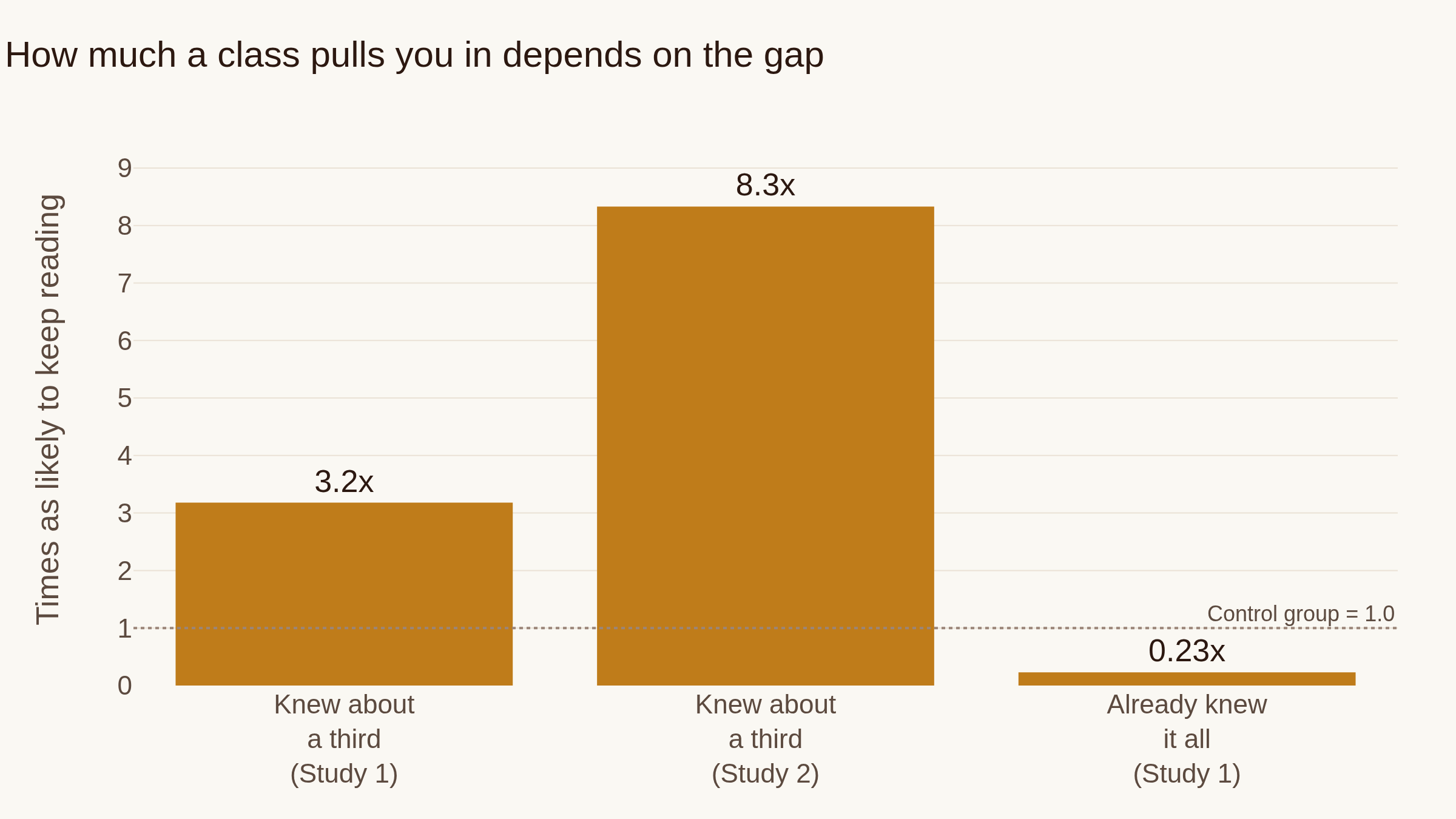
The problem usually isn't motivation. It's that you don't know enough yet to be curious.
How to Memorize Formulas for a Test
Sort your formula sheet into derive, decode, and drill, and only memorize the last pile.
How to Study for an Essay Exam
Rehearse the argument, not the reading: predict the prompts, drill timed outlines, and stock a bank of reusable evidence.
How to Study for Two Exams on the Same Day
Split your hours by weight and gap, rehearse the subject switch, and plan the fifteen minutes in between.
Sleep or Study Before an Exam? What to Do When You're Behind
Why sleep wins, the trap that hides the cost, and a triage plan for when you're behind at 11 p.m.
How to Study for an Open-Book Exam
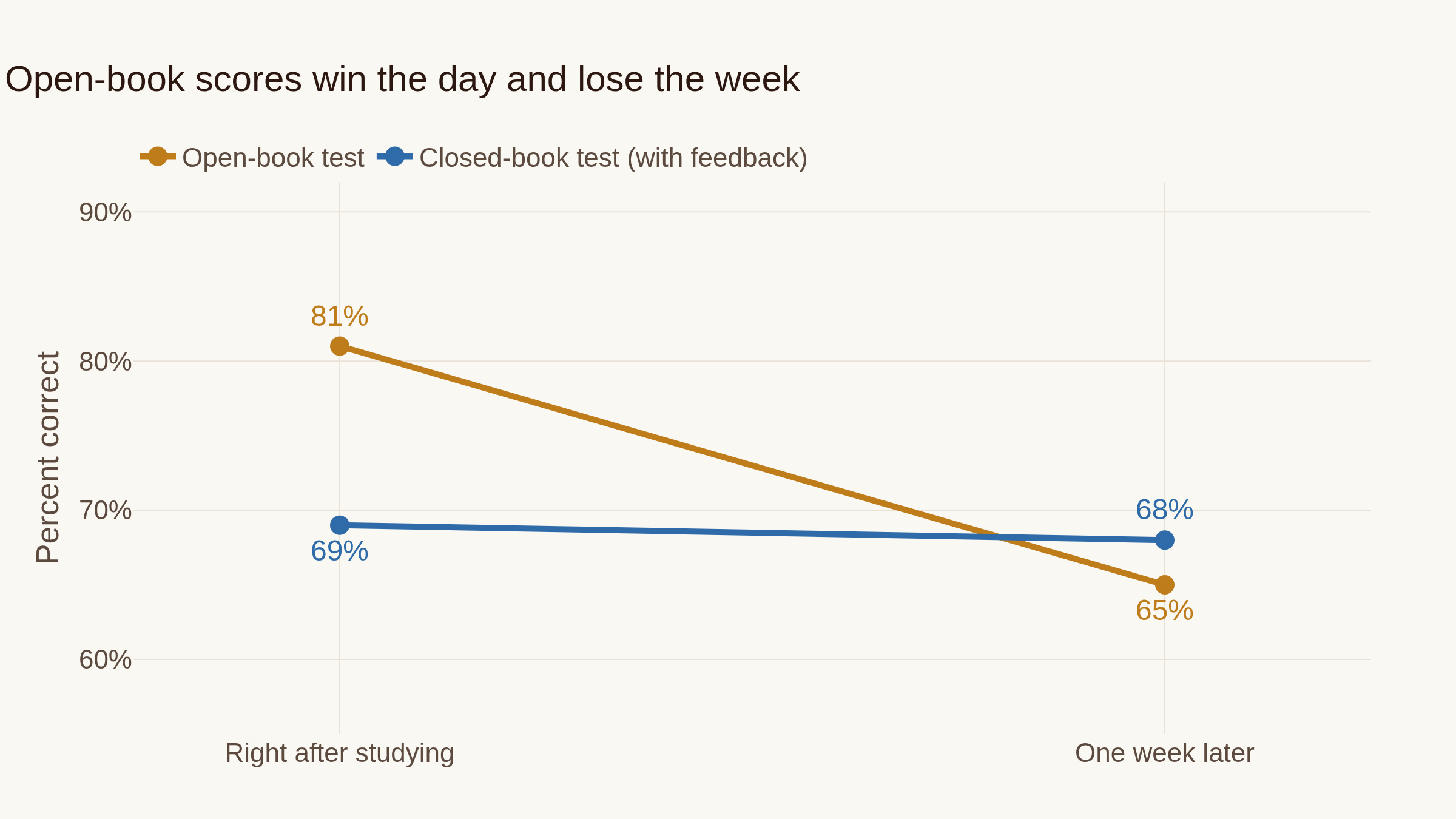
Why the book helps least when you lean on it most, and how to prep so you barely need it.
How to Stop Overthinking on a Test
Why it is really an attention problem, and the three fixes that point you back at the question.
What to Do When a Professor Won't Return Your Exams
You can still review a test you never get to keep, and it works better than the paper would.
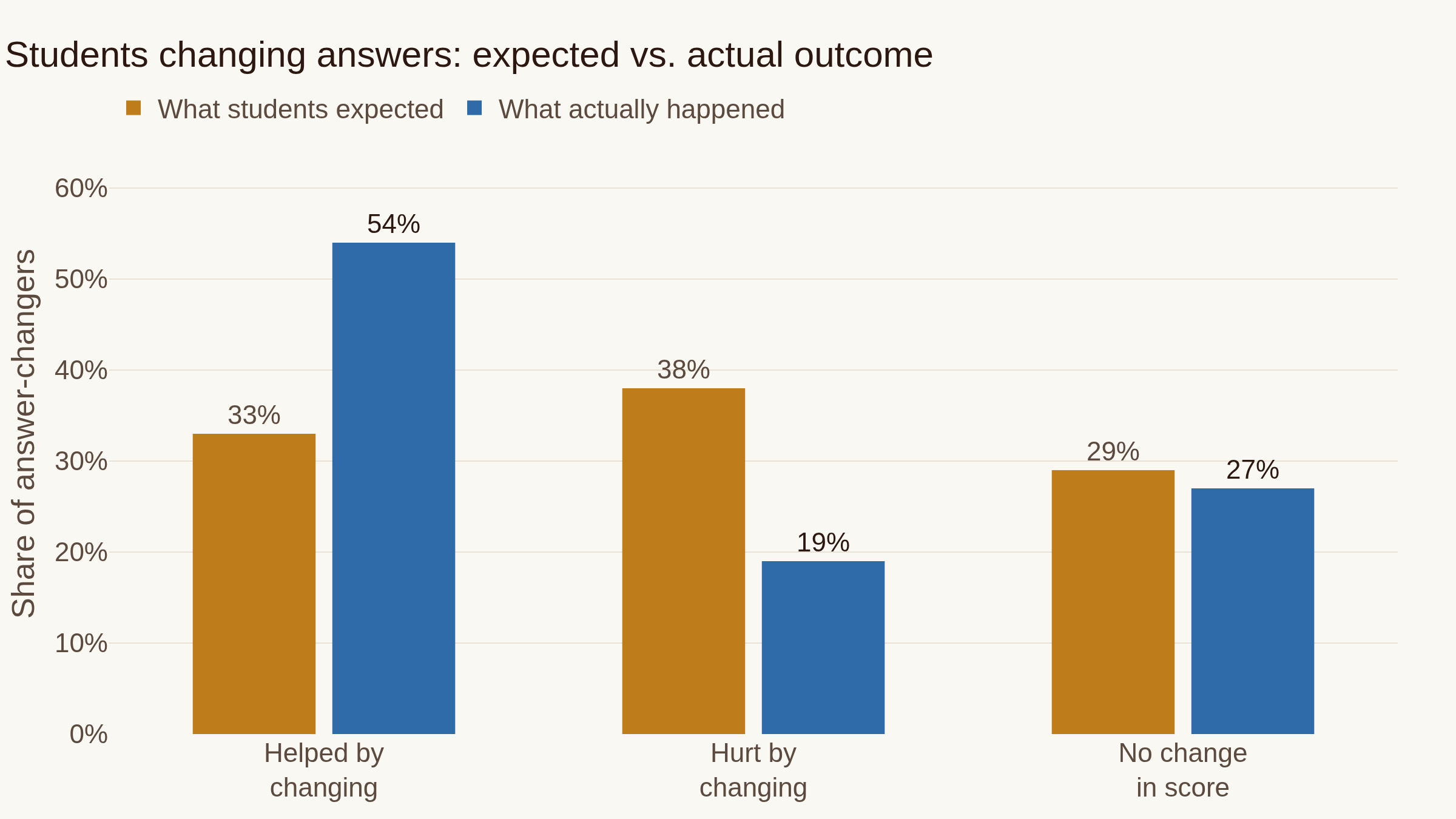
Should You Change Your Answer on a Test?
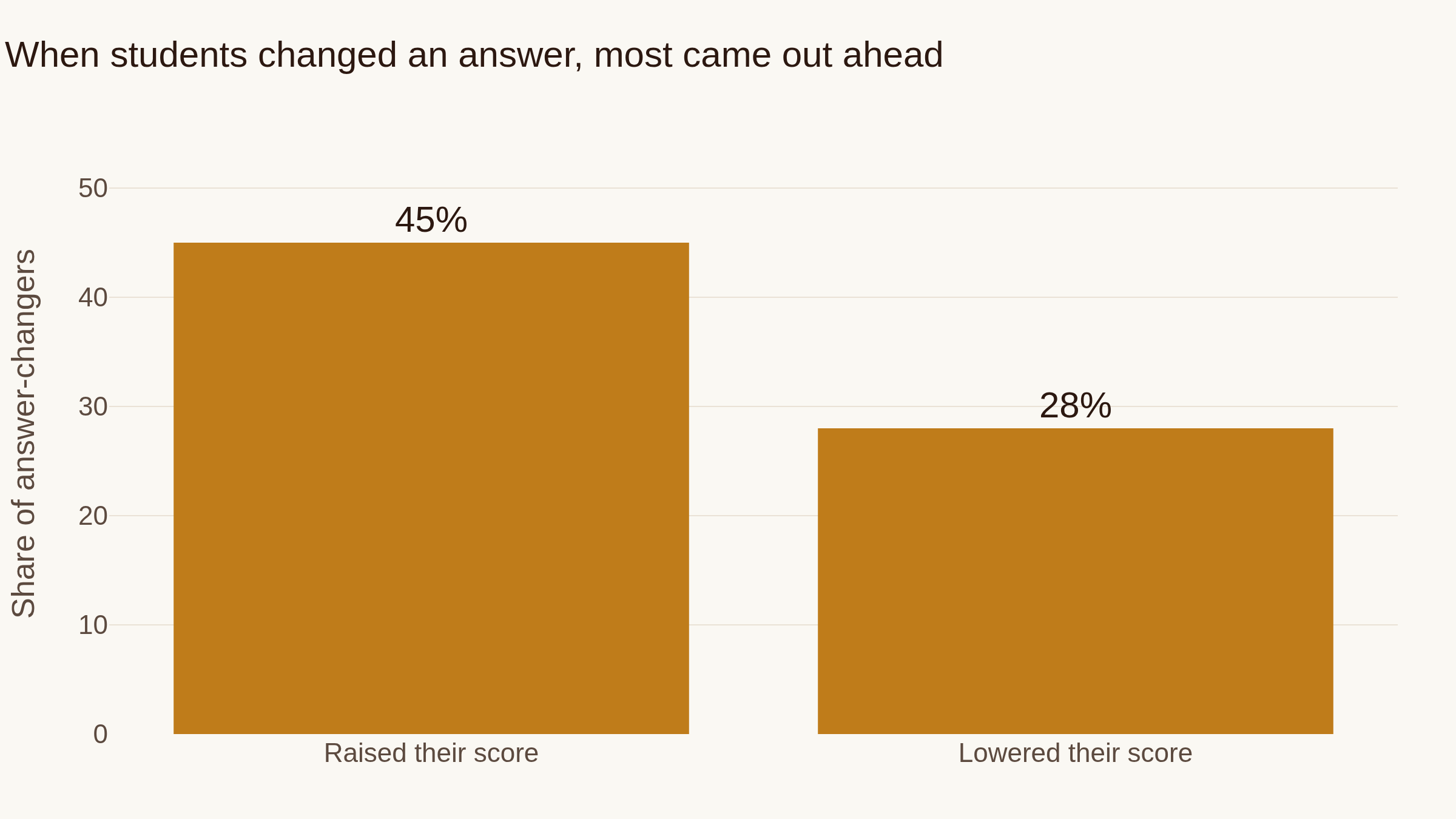
The research says changing usually helps. The catch is which changes.
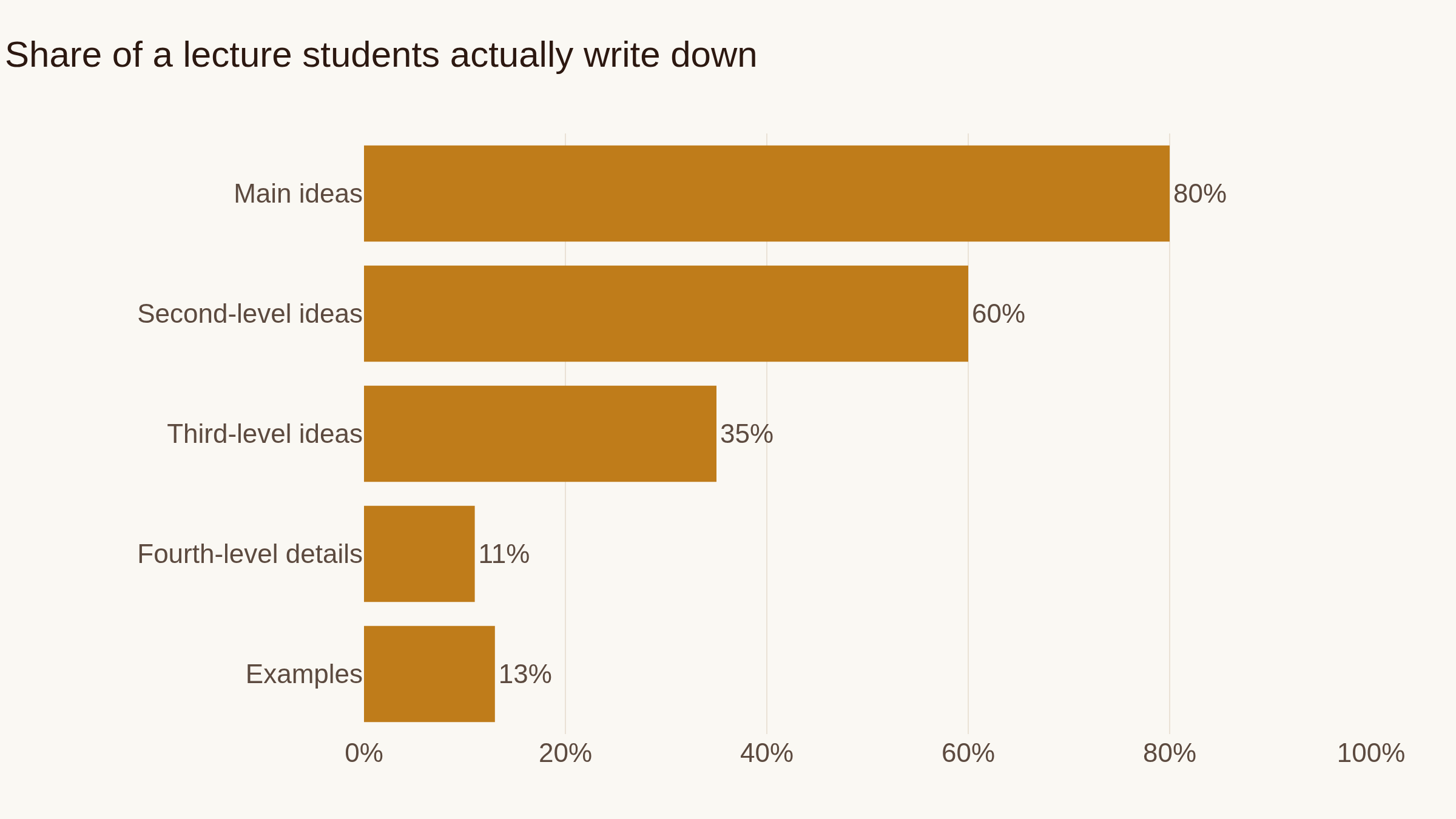
How to Take Notes Faster in Class (Without Writing Every Word)
You already catch about 80% of a lecture's main ideas and almost none of the examples. The ten minutes after class are where the rest comes back.
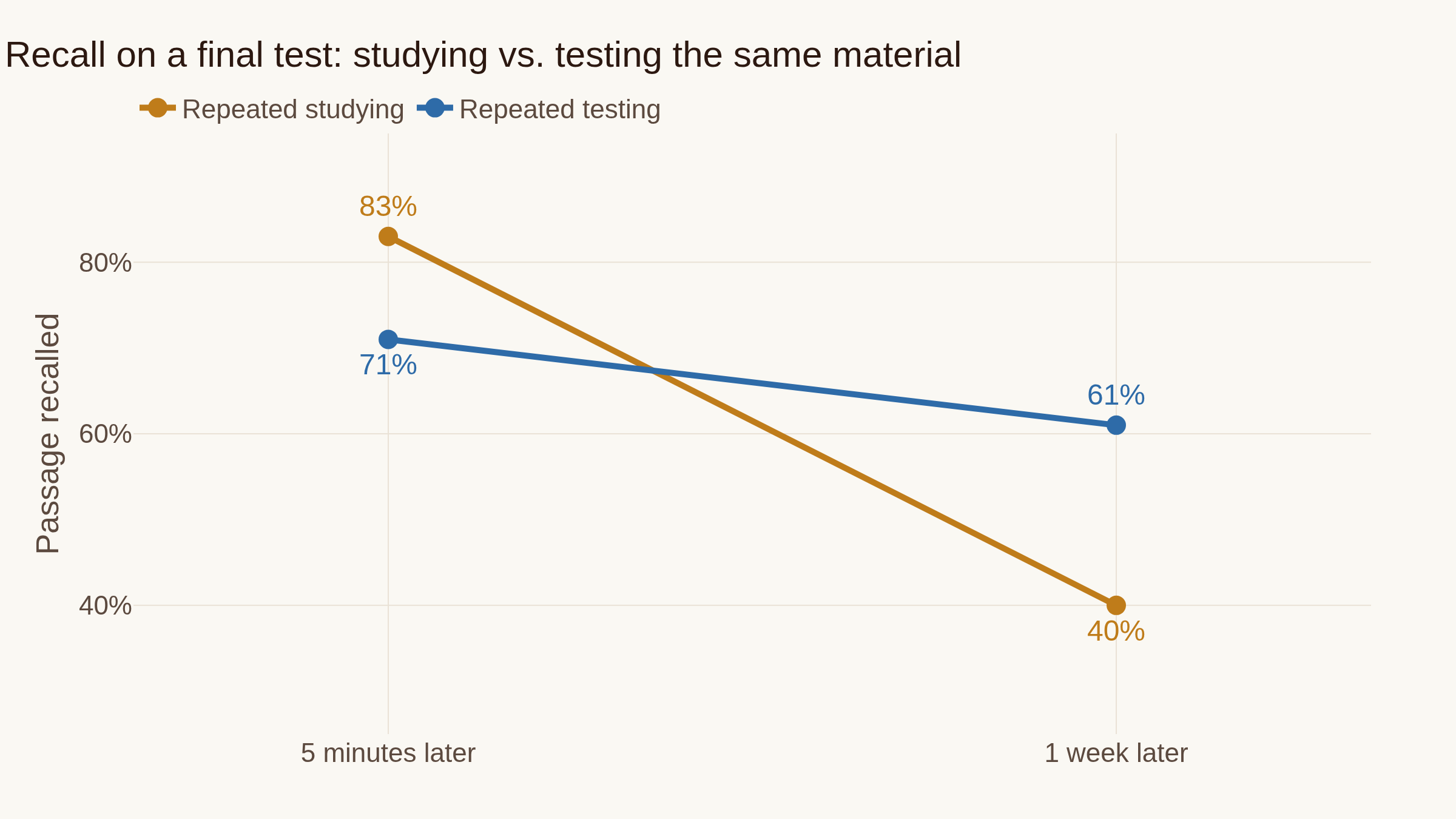
The Leitner System for Flashcards, Explained
A box-by-box method that makes your flashcards spend time where you are actually weak.
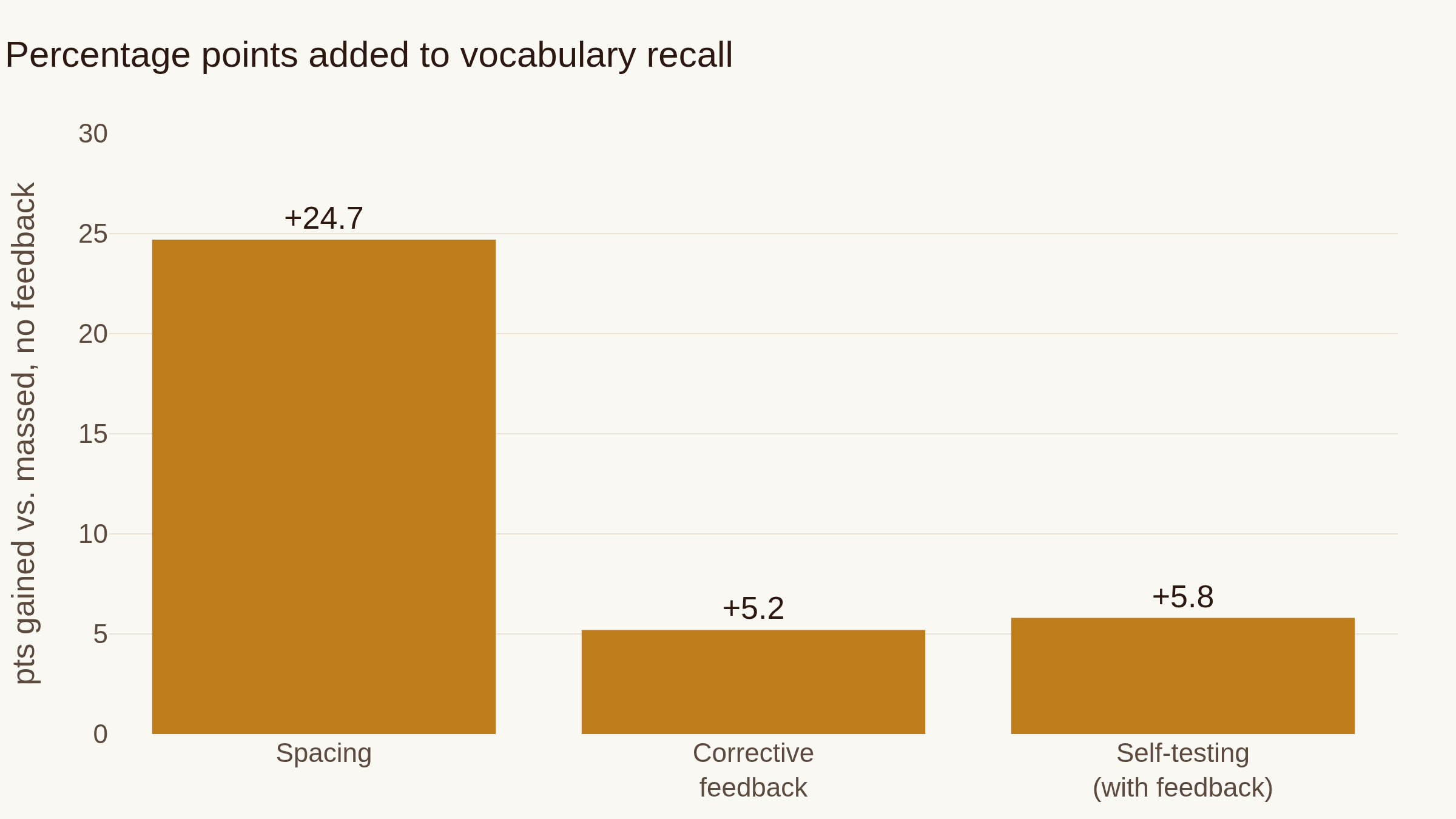
How to Memorize Vocabulary for a Language Class
The quiz doesn't ask you to recognize the word. It asks you to produce it, which is a harder skill and the one most study methods quietly skip.
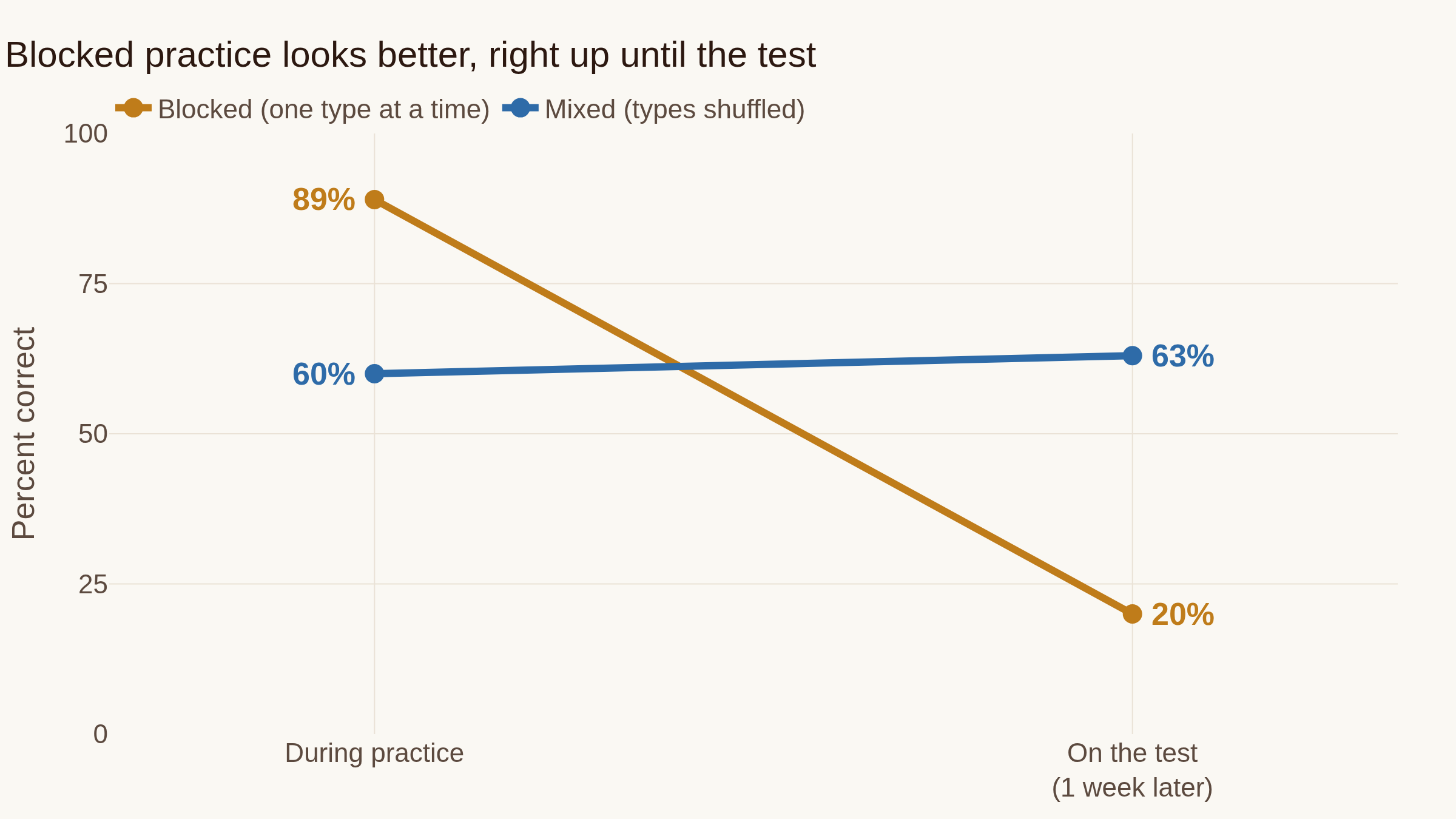
How to Study for a Math Test
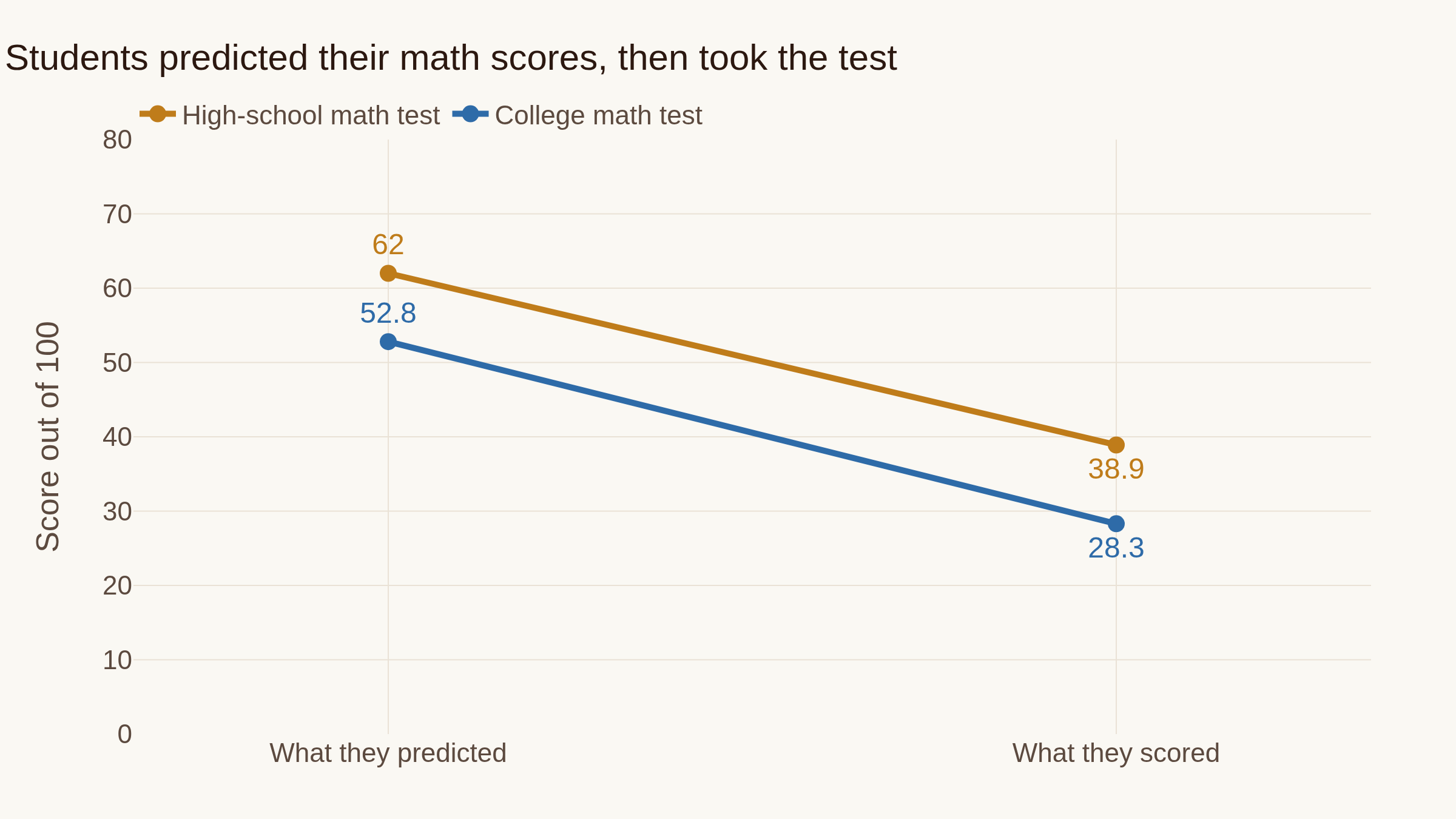
The worksheet trains you to run a method you were handed. The test hides which method to use. Practice the part the test actually asks for.
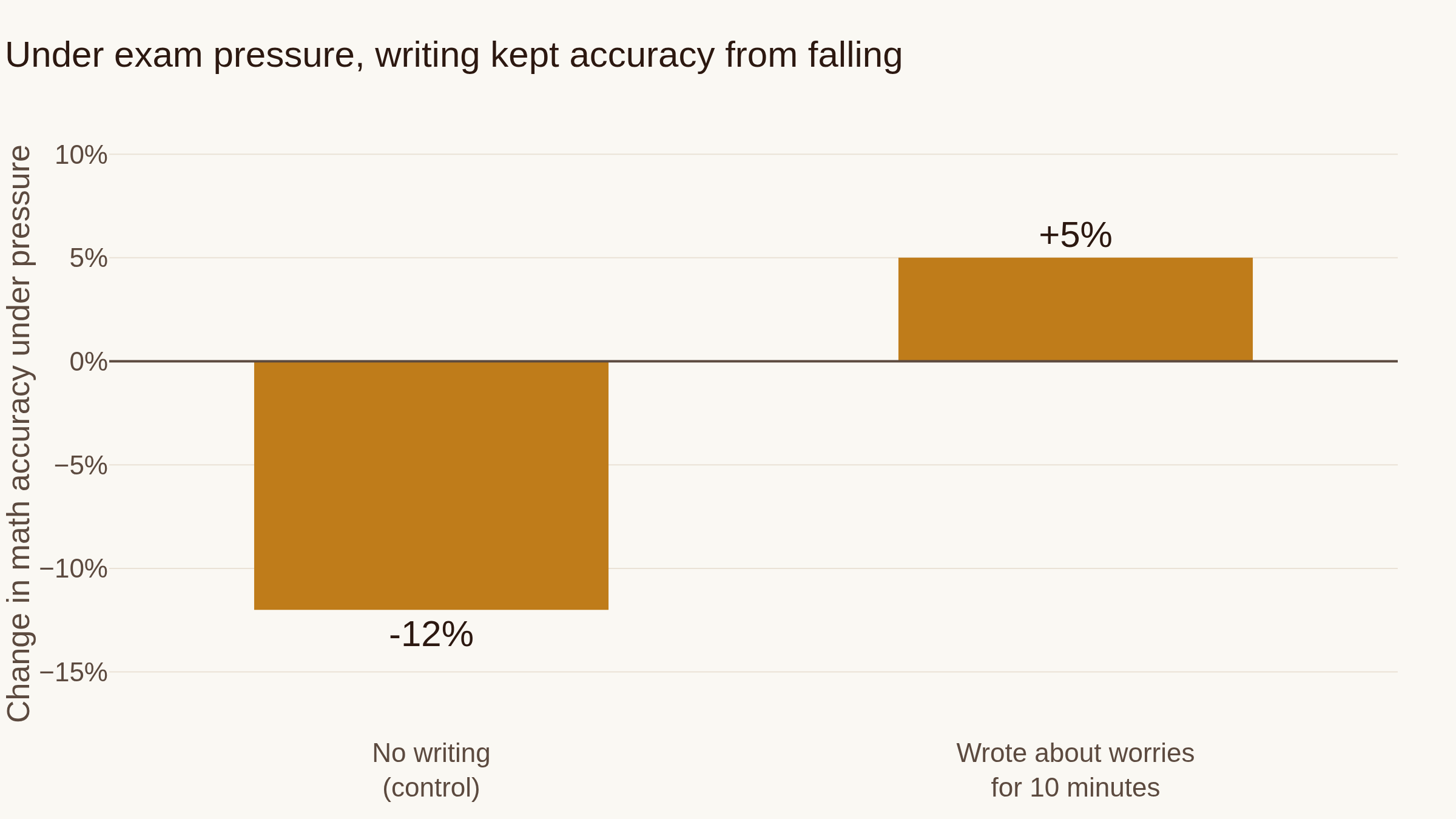
How to Calm Test Anxiety Before an Exam
It is really two problems with two nearly opposite fixes.
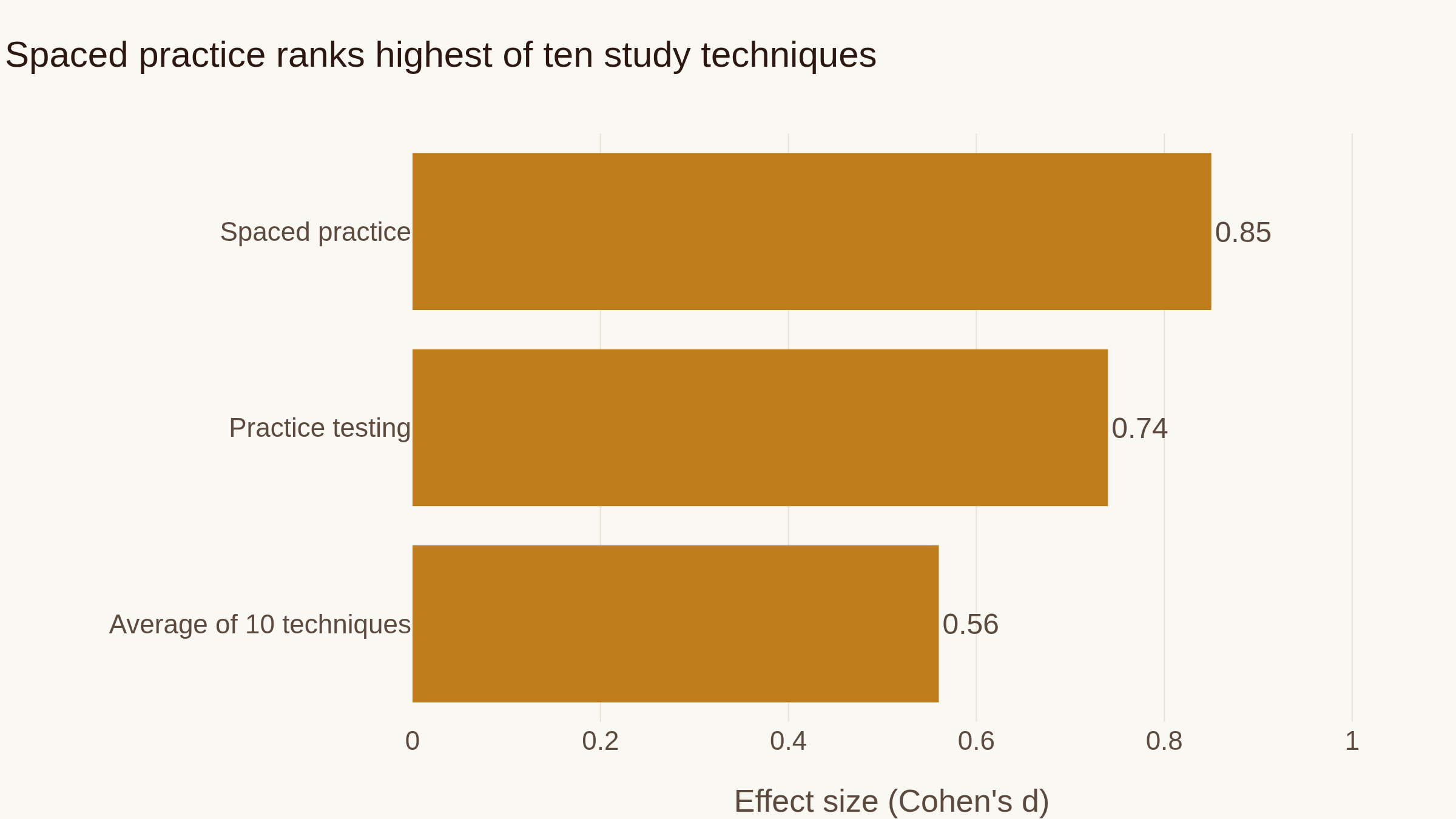
How Far in Advance Should You Start Studying for an Exam?
The honest answer is not a fixed number of days. It scales with how much you have to remember and for how long, so you can back-plan the start date.
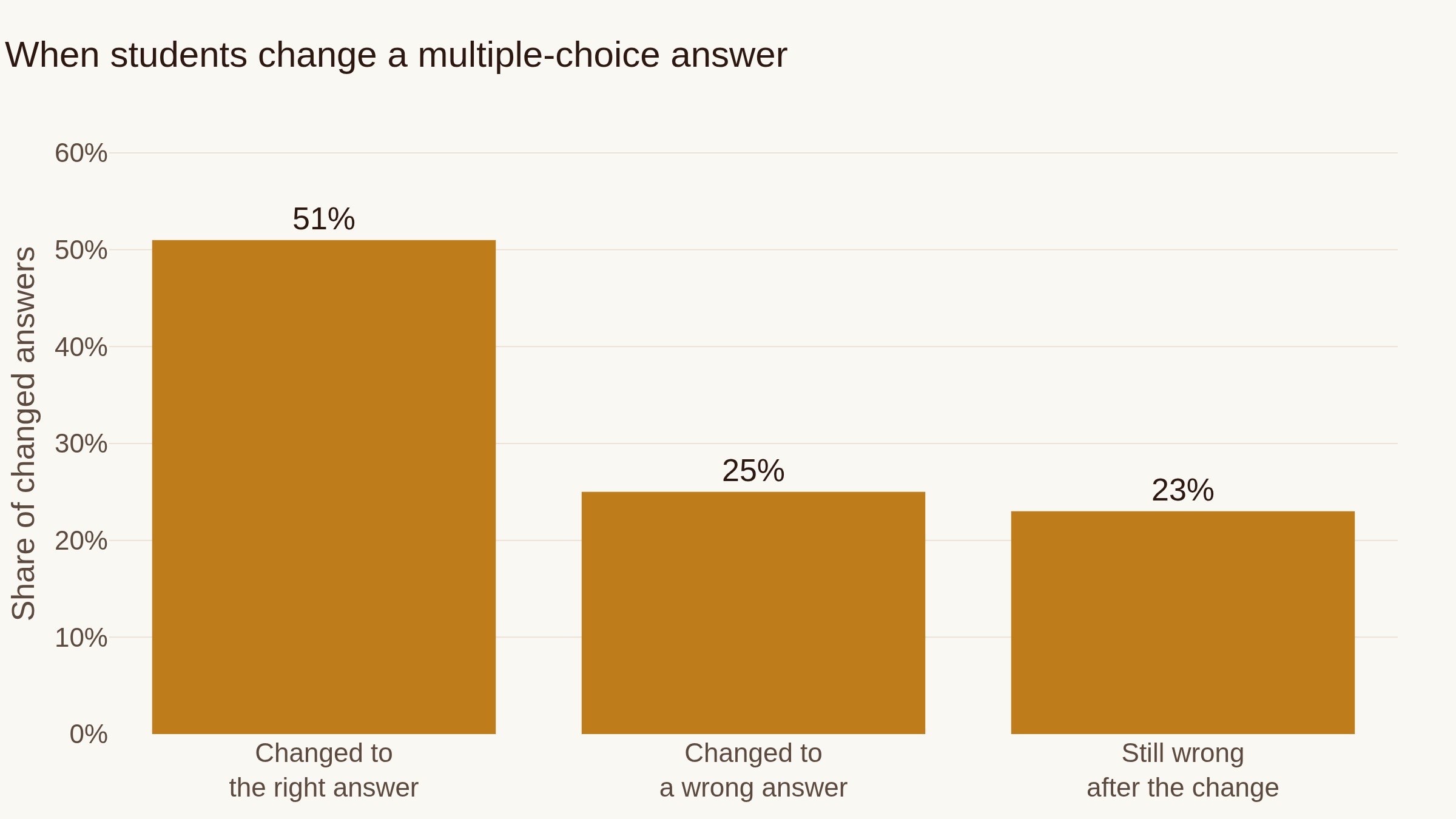
How to Study for Multiple-Choice Exams
The distractors are the real test. Study by producing answers and knowing why the wrong ones are wrong, not by rereading until it all looks familiar.
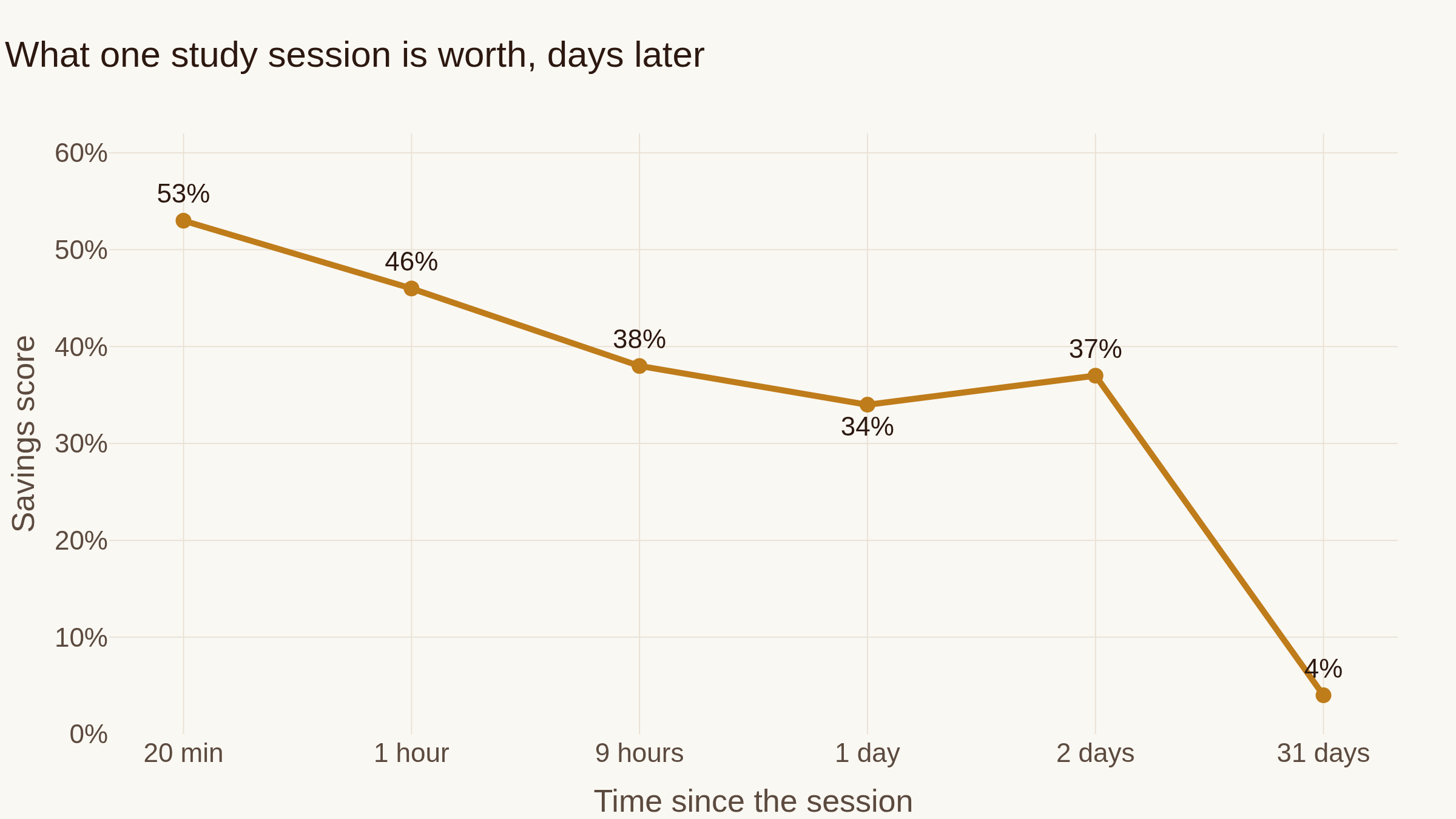
How to Study for a Cumulative Final Exam
Triage the whole semester by exam weight and forgetting, then spend your hours where they actually move your grade.
Does the Blurting Method Actually Work?
It is real retrieval practice, but two quiet habits can cancel the payoff.
How to Review a Graded Exam (and Actually Raise Your Next Score)
The wrong answers you were surest about are the easiest to fix and the most likely to come back. Here is the review that makes them stick.
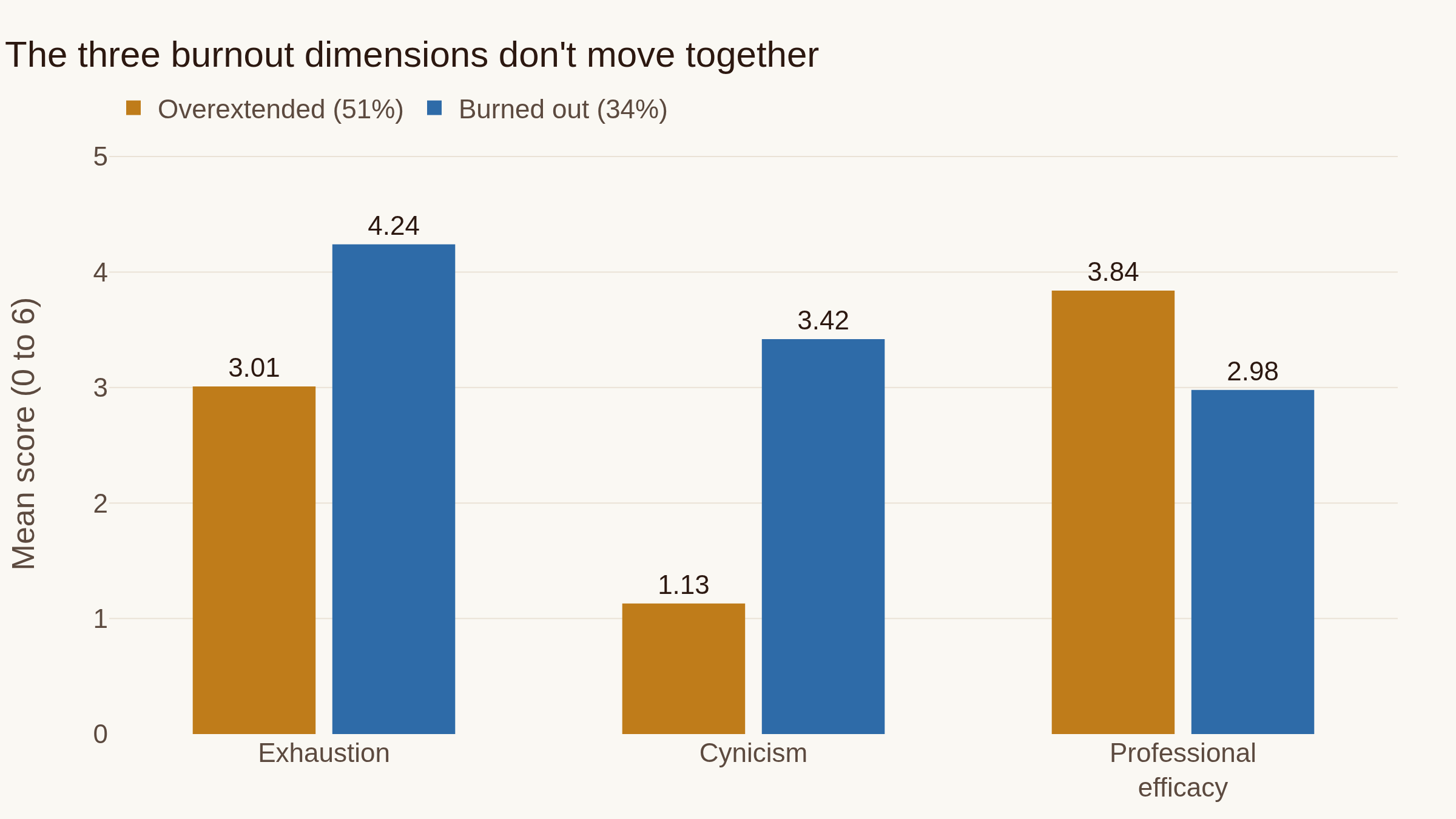
How to Study Without Burning Out
Burnout runs on three separate dials, and rest only reaches one of them.
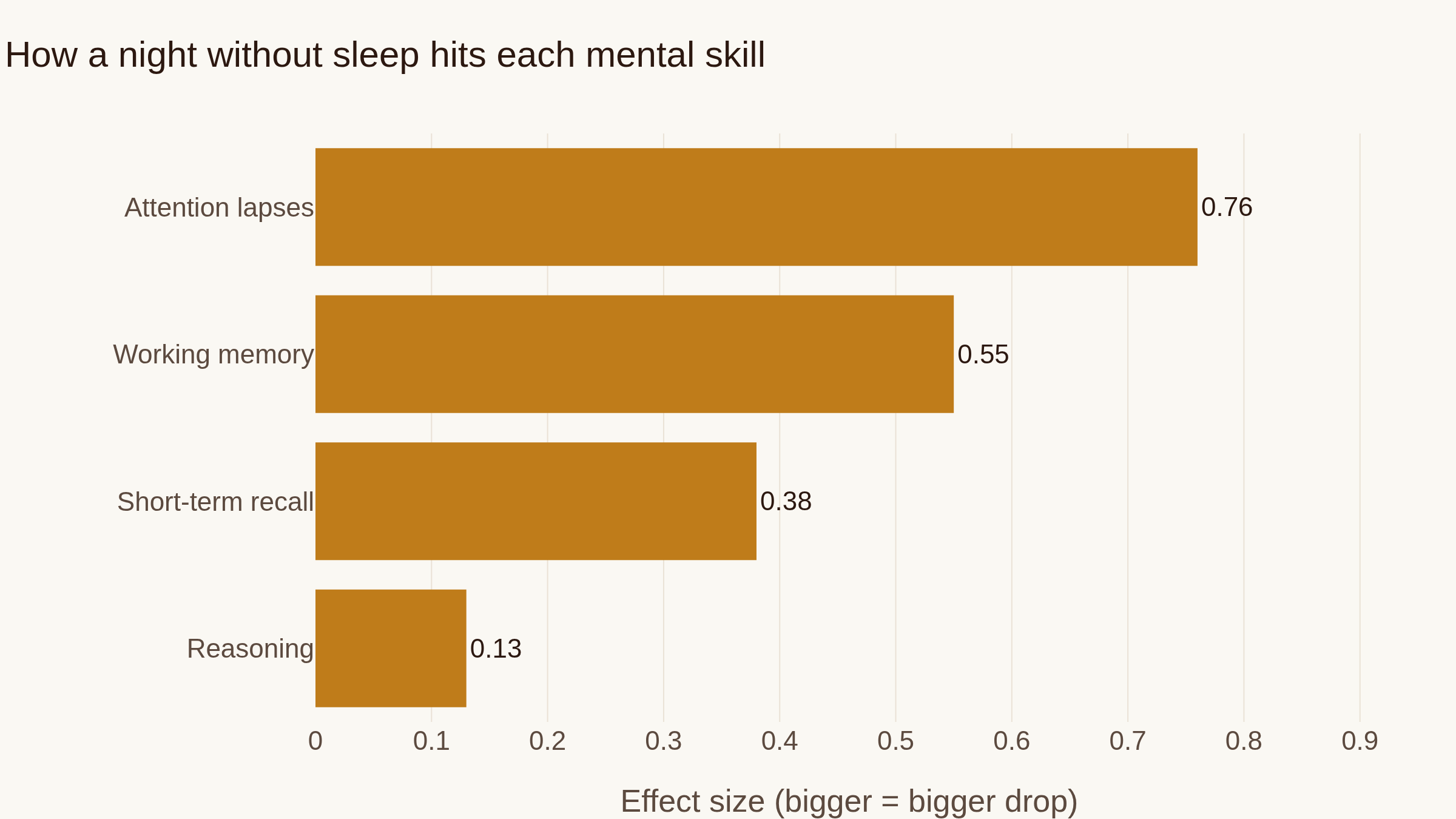
How to Study the Day Before a Test Without Cramming All Night
The last day is not for relearning the course. It is for finding the few things you can't recall yet, drilling only those, and protecting the sleep that decides how much you keep.
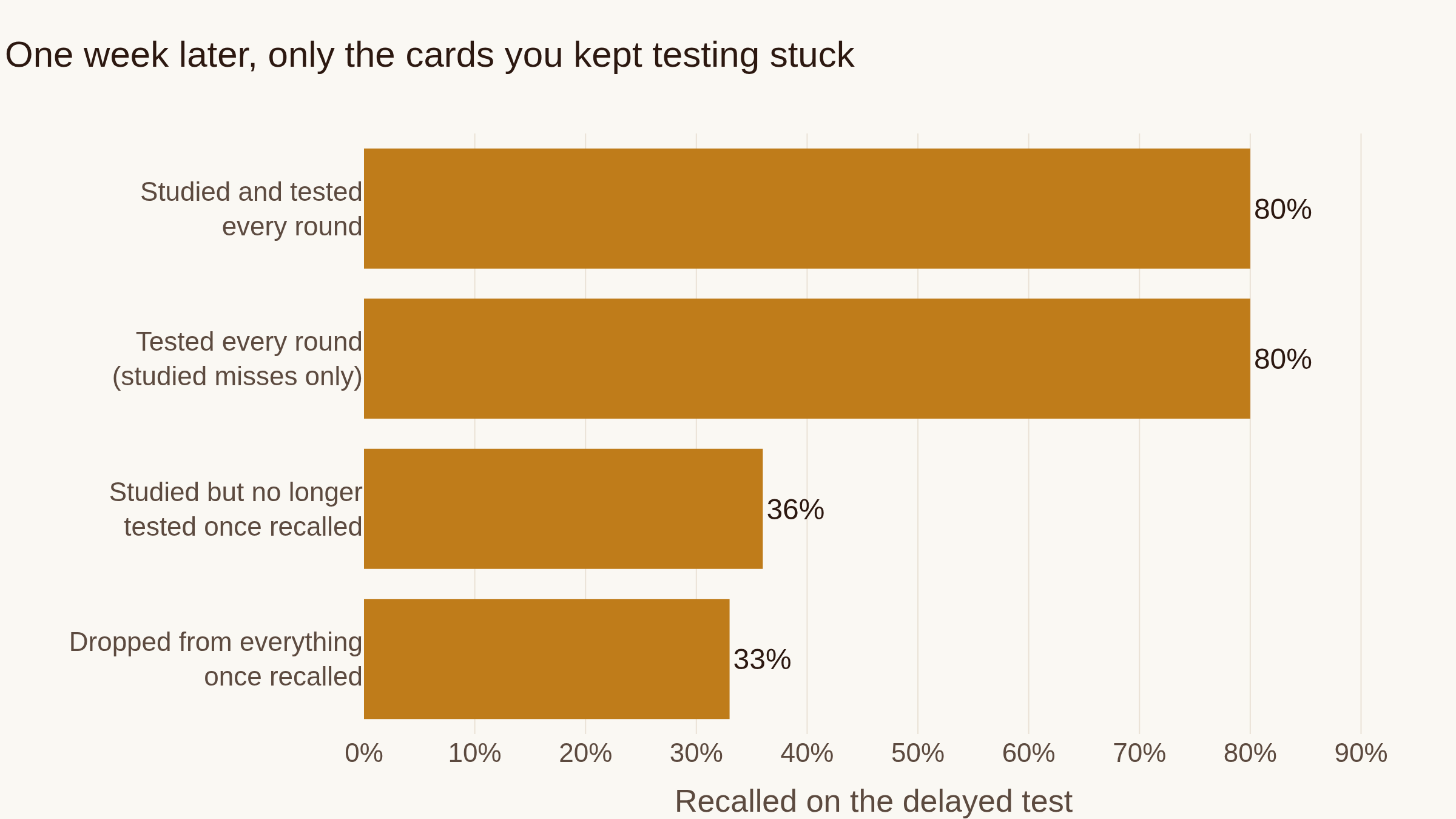
Paper vs. Digital Flashcards: Which Helps You Remember More?
The medium is close to a coin flip. The one thing that decides how much sticks works the same on index cards and in an app, and most students skip it on both.
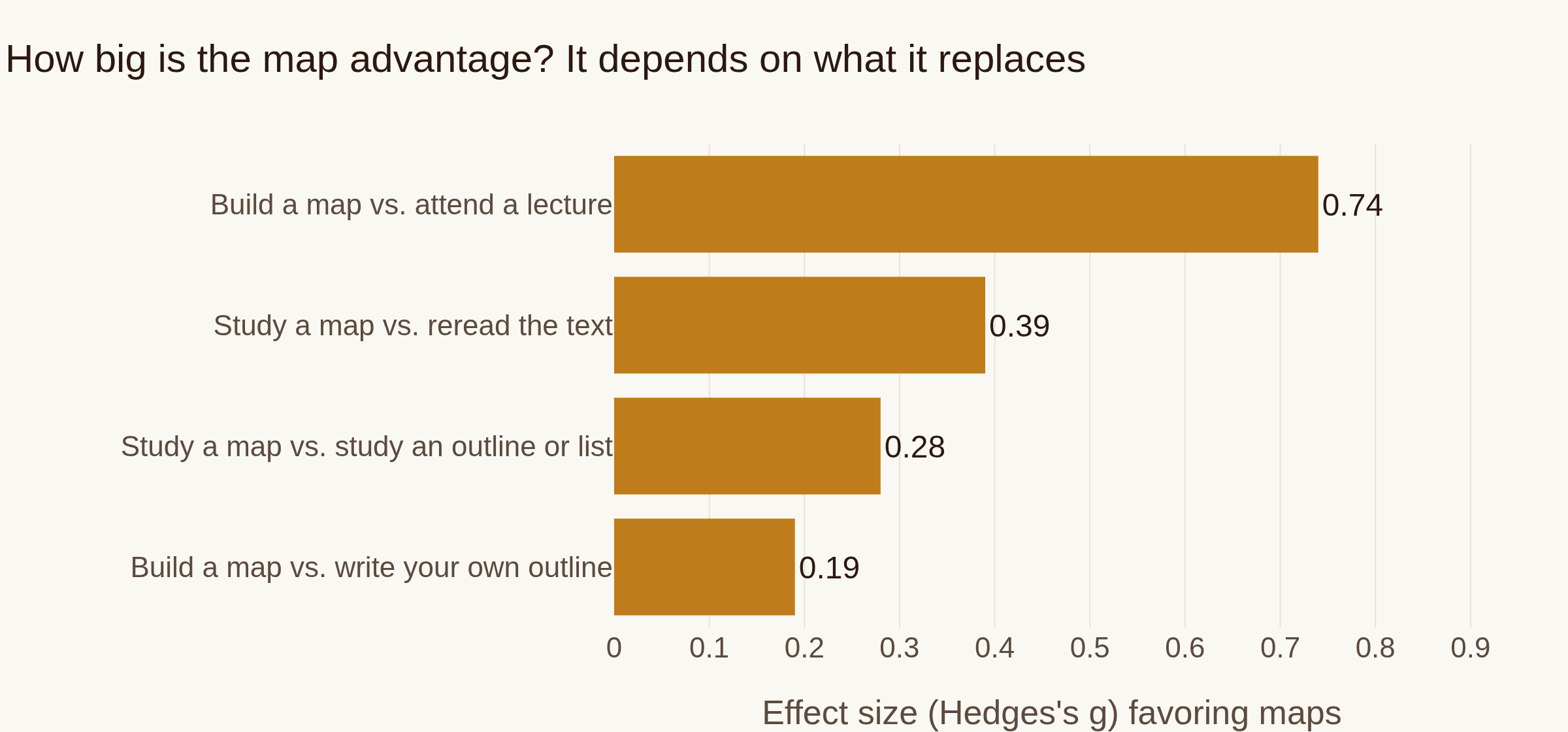
Do Mind Maps Actually Help You Study?
What the research really shows, and when a map is worth your time
How to Memorize a Large Amount of Information for a Test
When there's too much to learn, the answer is selection and scheduling over raw memory.
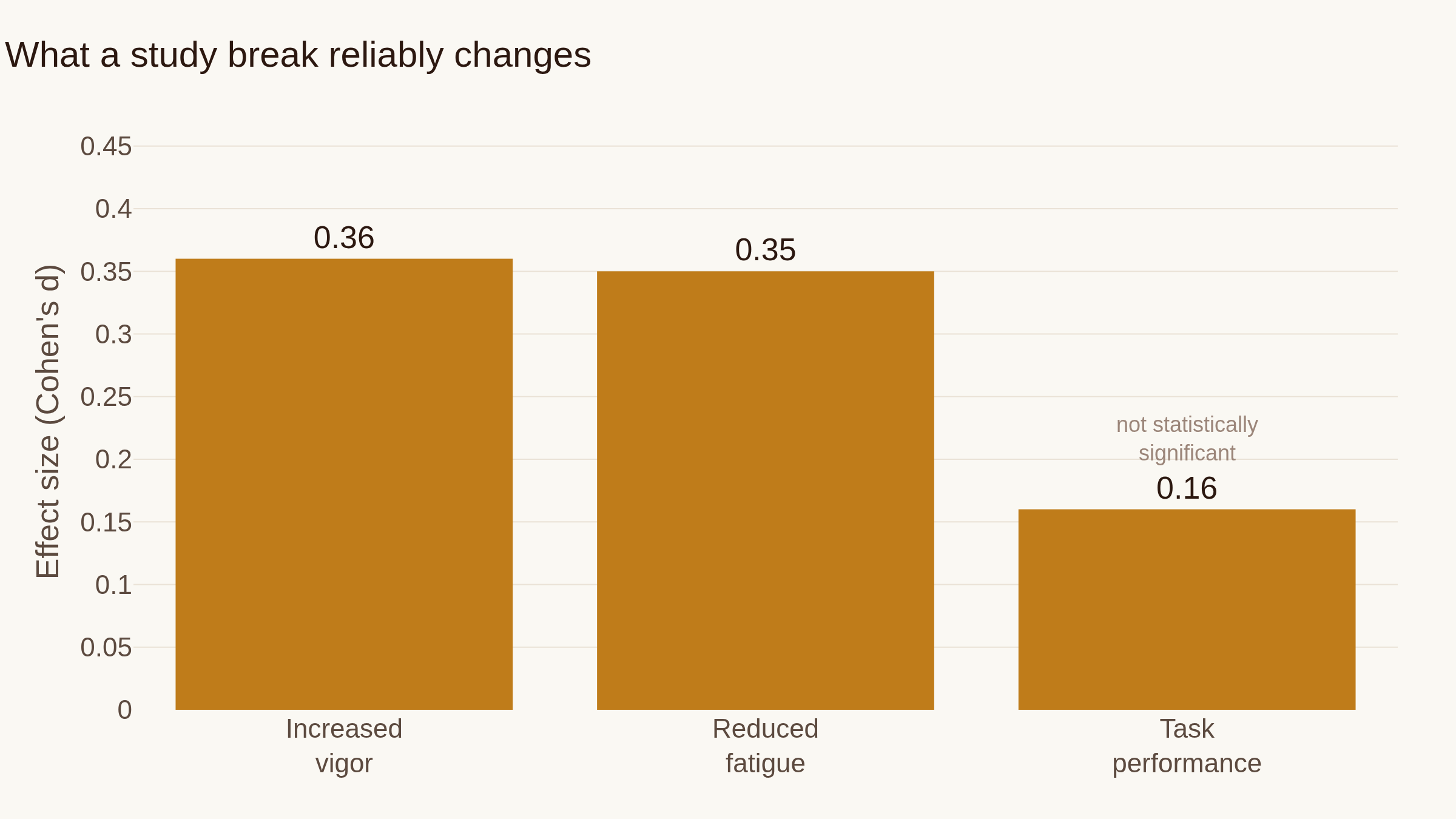
How Long Should Study Breaks Be?
The length everyone argues about barely moves your grade. What you put in the break is the part that does.
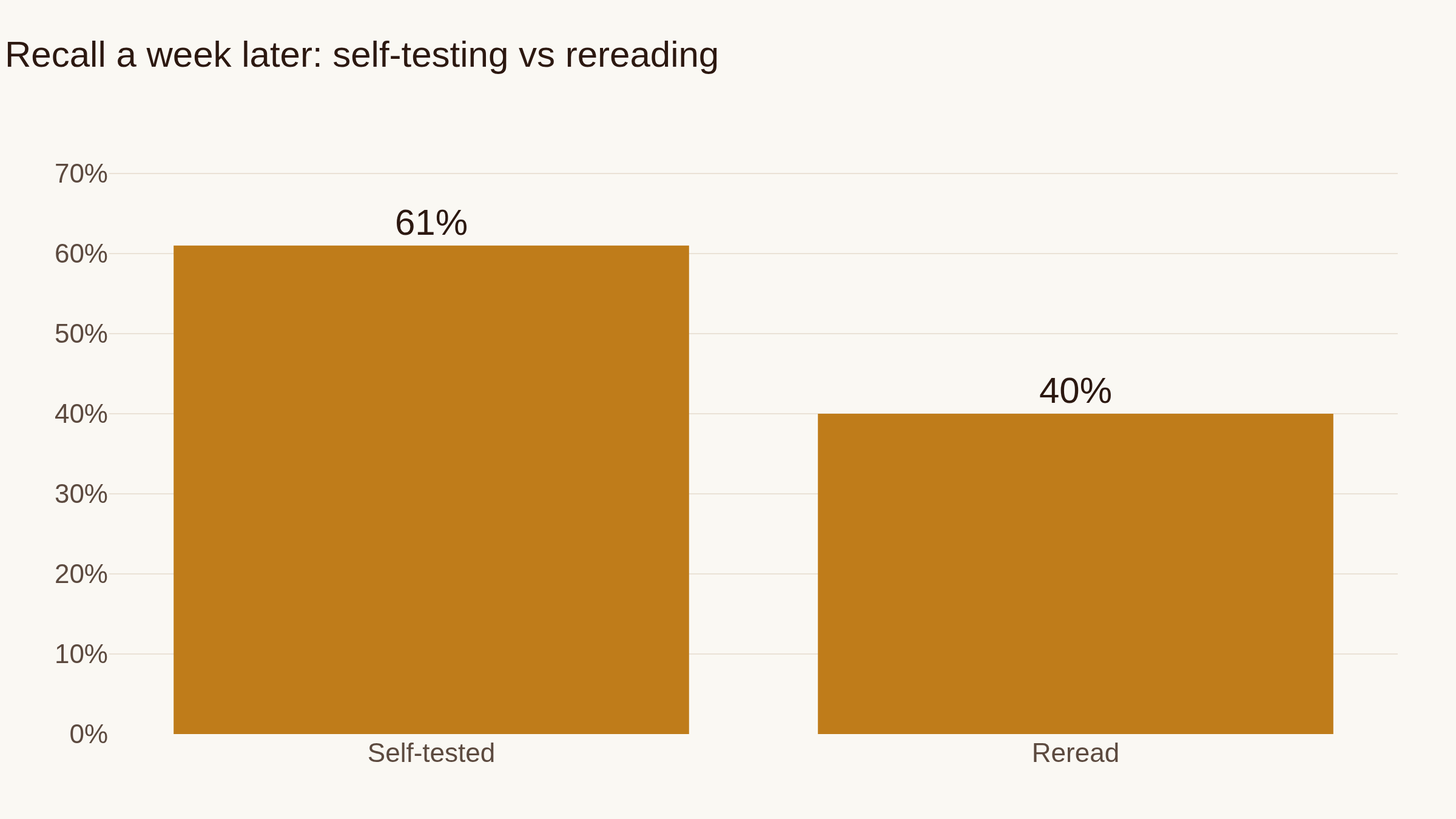
How to Make a Study Guide That Actually Works
Build it from questions and quiz yourself across the week.
How to Use the Feynman Technique to Study
The four-step method that turns "I think I get it" into a list of exactly what you don't.
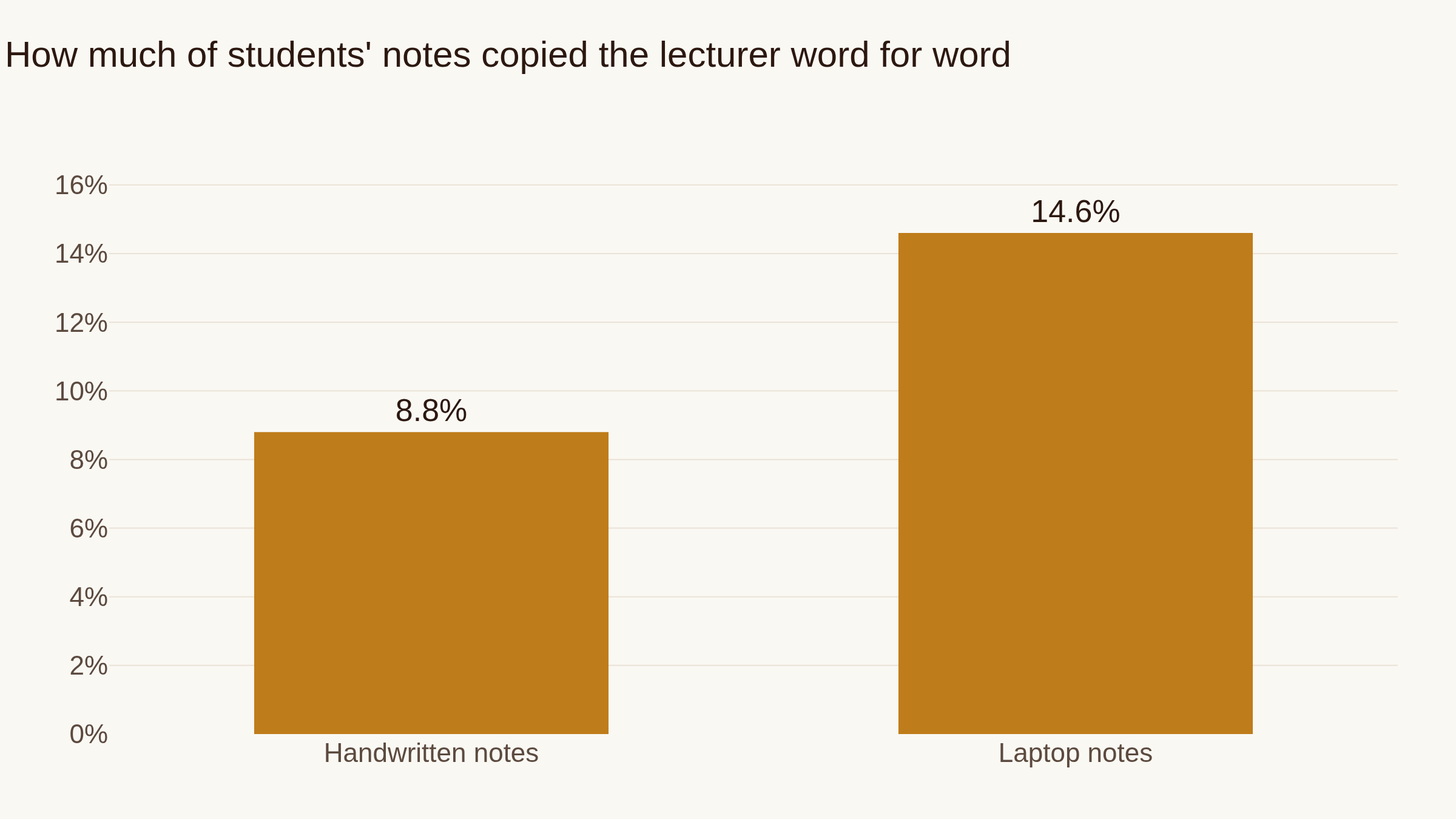
Digital Notes vs. Paper Notes: What Actually Helps You Study
The famous "paper wins" study barely held up. The real question is whether you write in your own words, and what you do with the notes after.
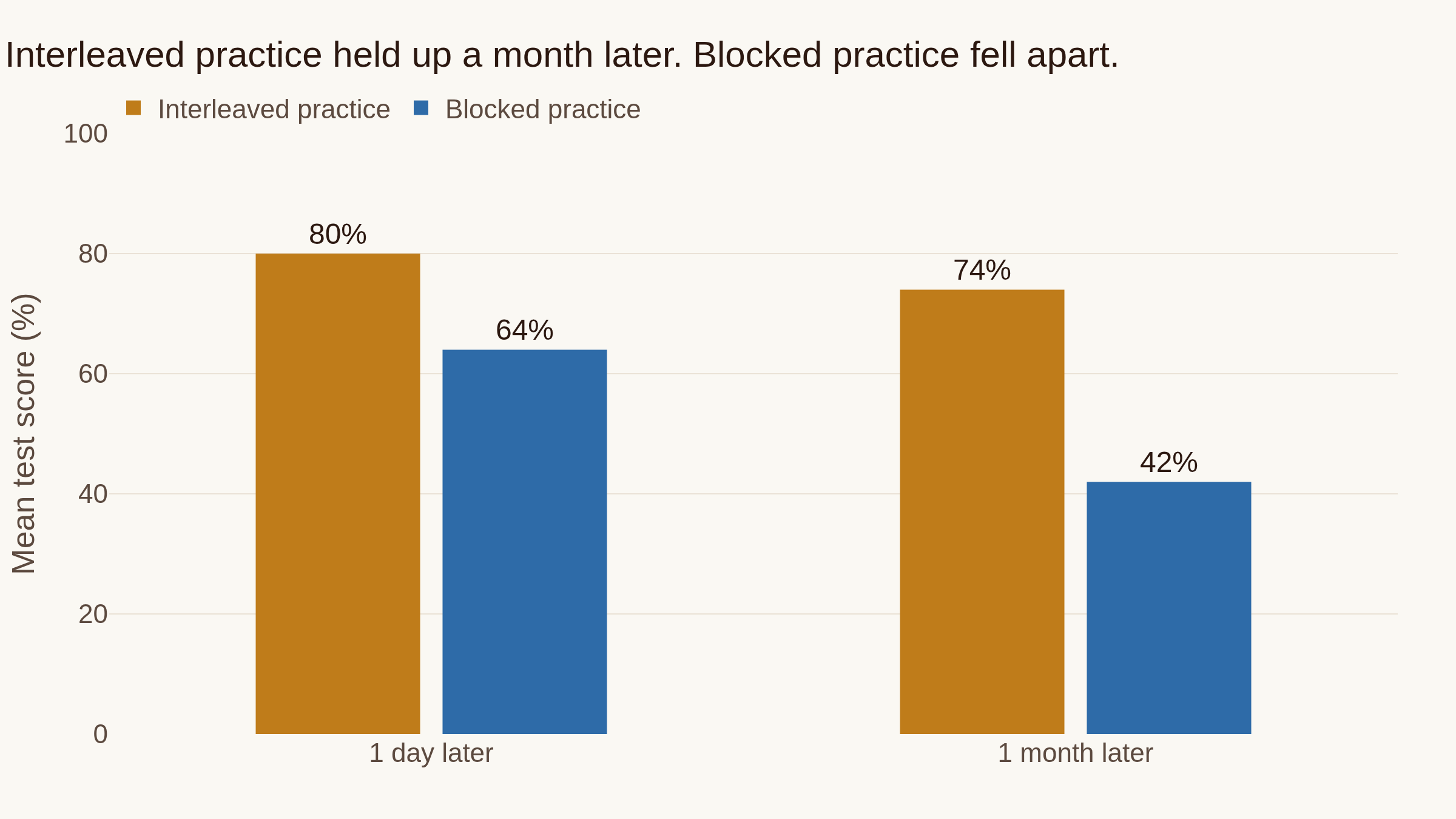
Interleaving vs. Blocked Practice: Should You Mix Up Your Studying?
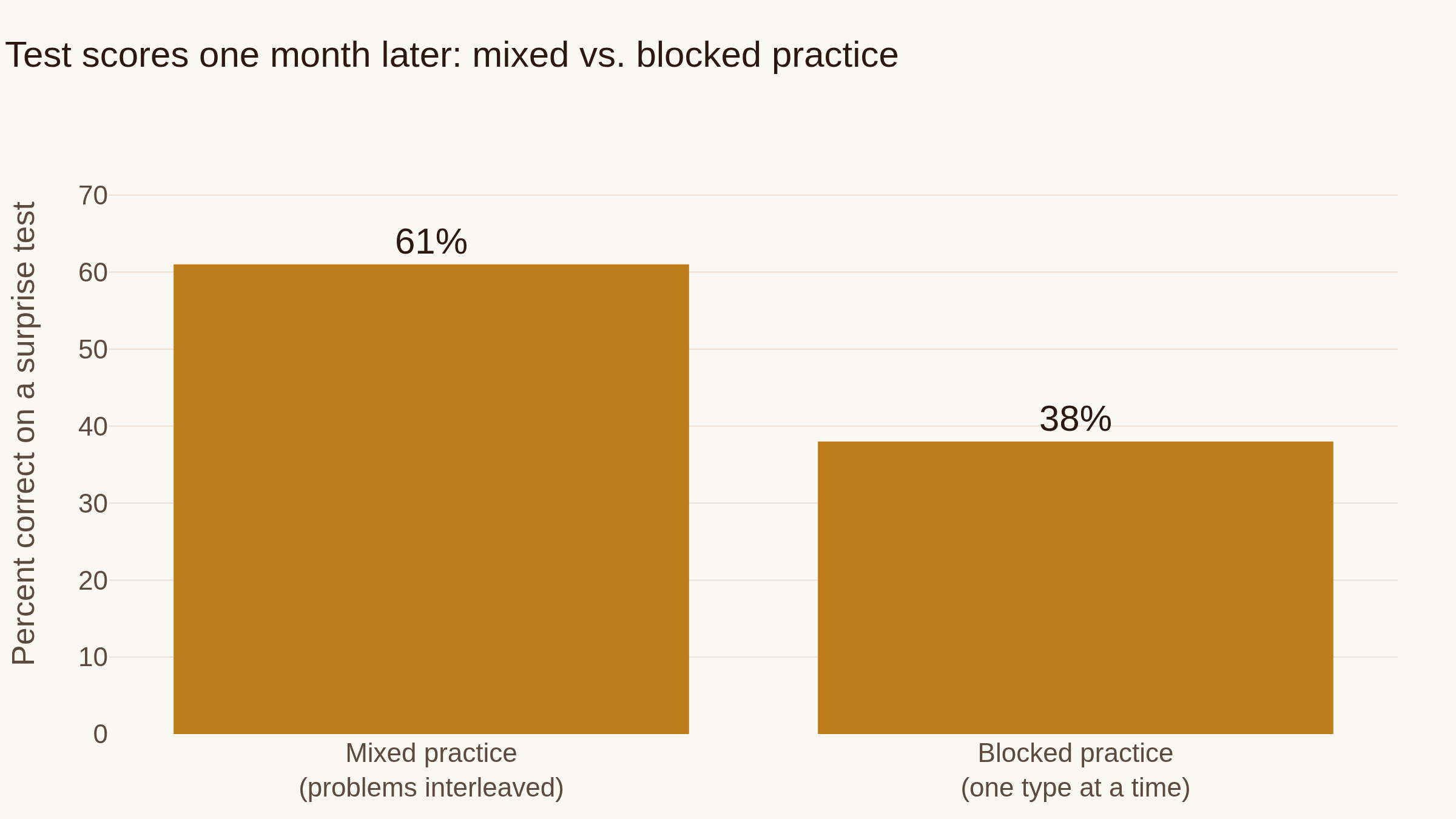
The case for mixing up your problem sets, and the one way most study advice gets interleaving wrong.
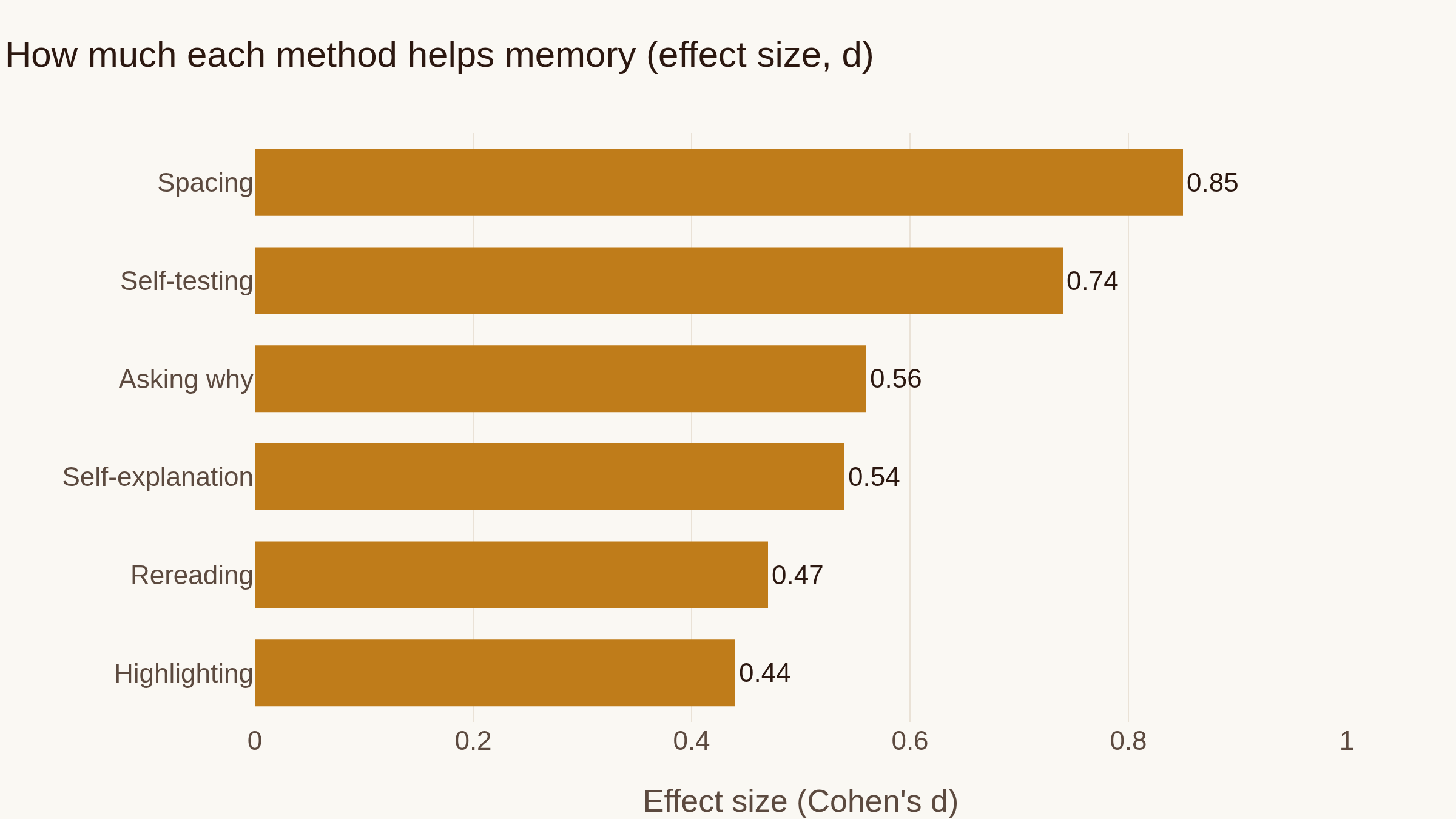
How to Remember What You Read
Understanding a page and remembering it turn out to be two different skills. Here is what the research says closes the gap.
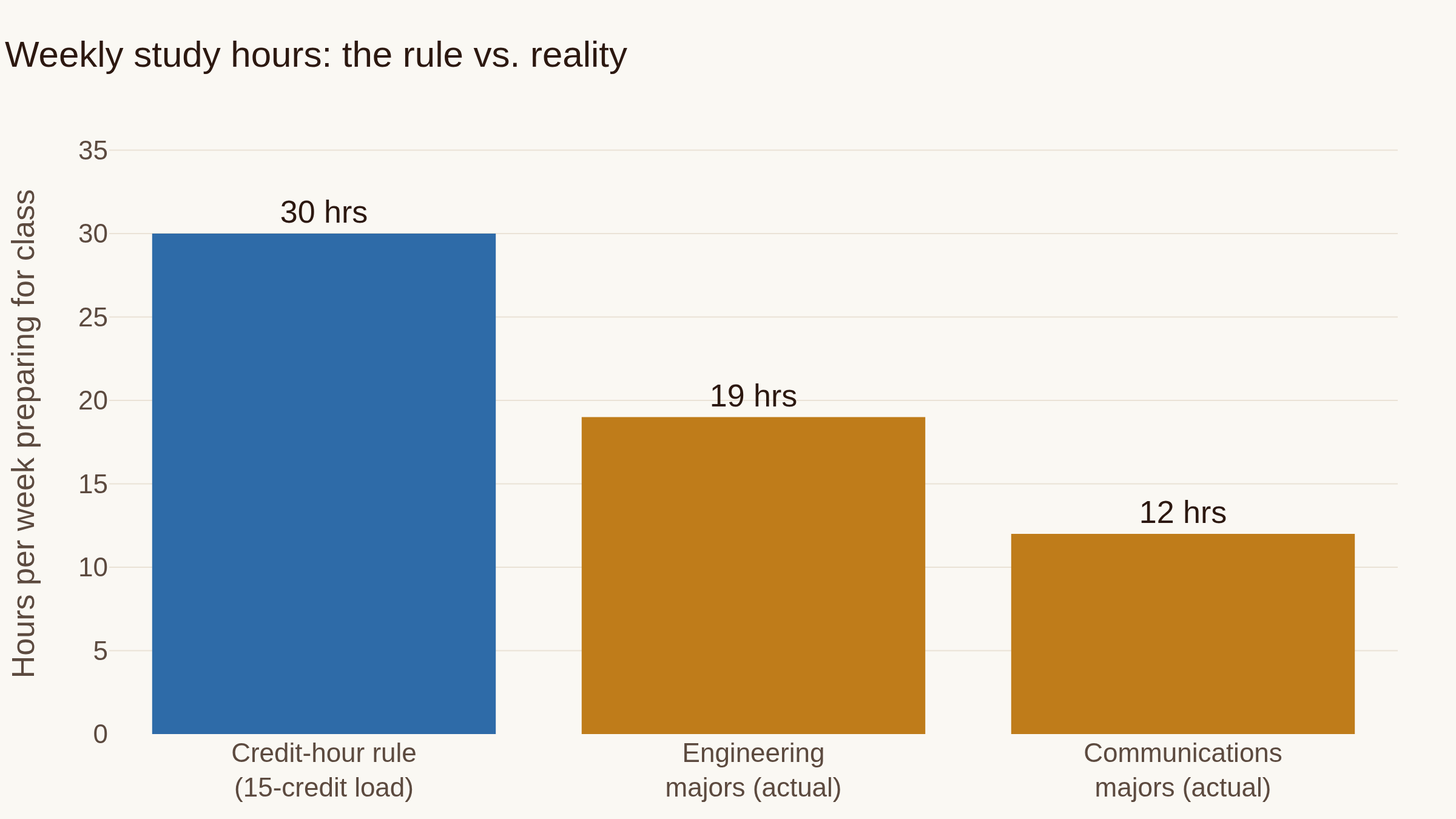
How Many Hours a Day Should You Study in College?
The honest answer isn't a number of hours. It's what you do inside them.
What Is the Best Time of Day to Study?
Why the answer is your own body clock, not a magic hour on someone else's schedule.
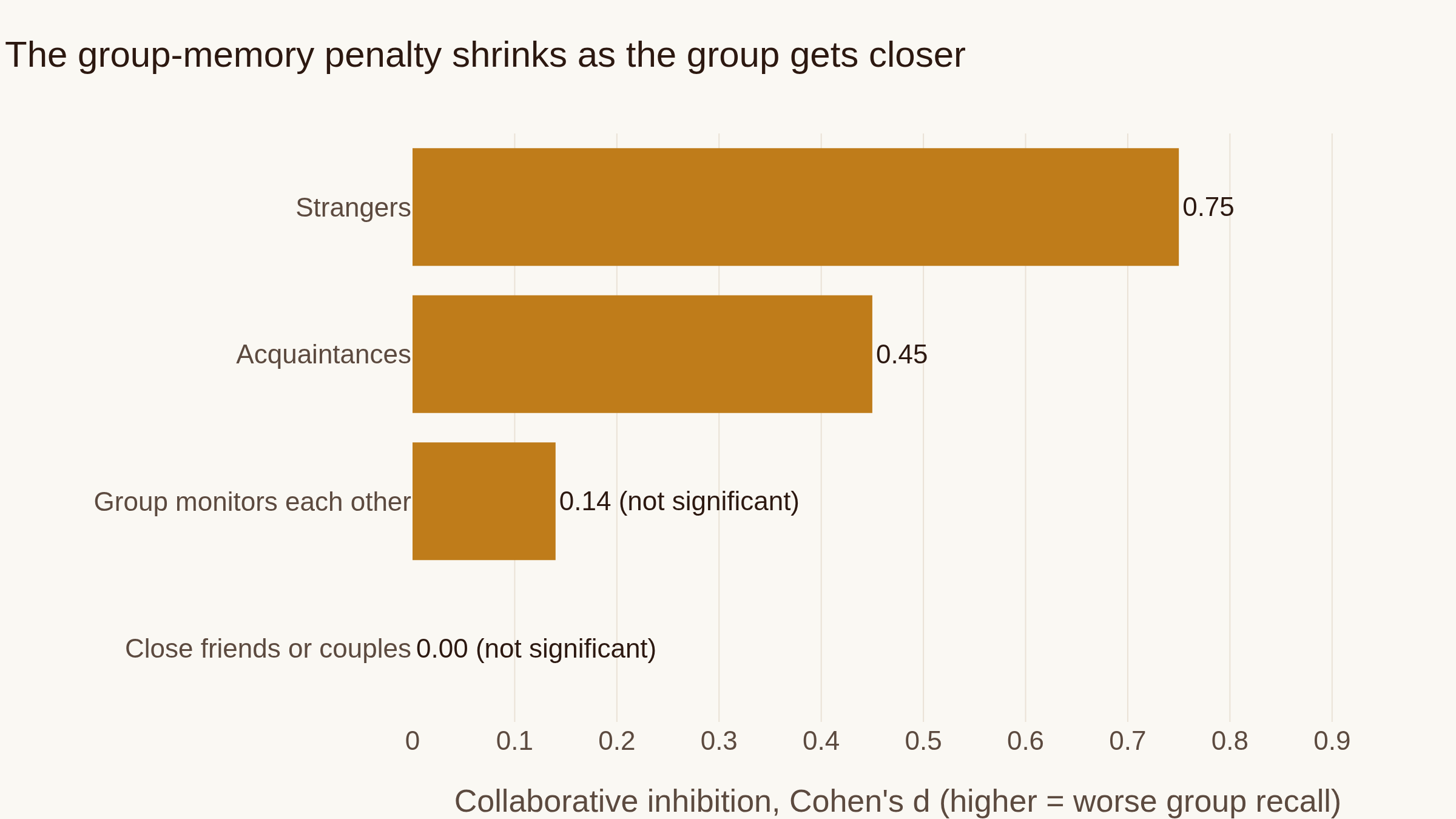
Study Alone vs Study Group: Which Is Actually Better?
Groups remember less together than they think. Here is the task-by-task rule for when to close the door and when to open it.
How to Study When You Have No Motivation
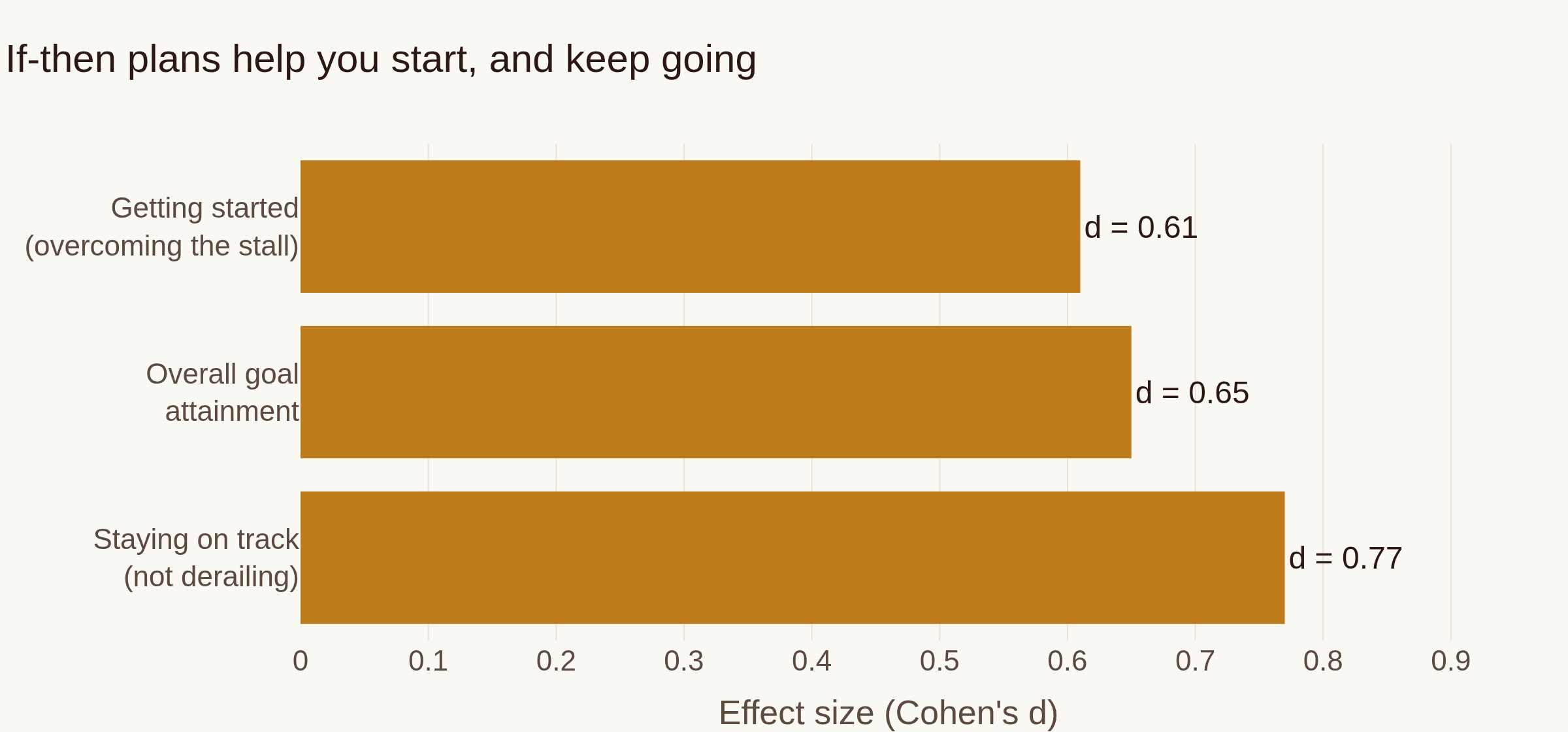
The trick is not feeling ready. It is making the first move small enough that ready stops mattering.
How to Focus While Studying When Your Phone Keeps Winning
Why distance beats discipline, and the exact setup that makes it work.
How to Make Flashcards That Actually Work
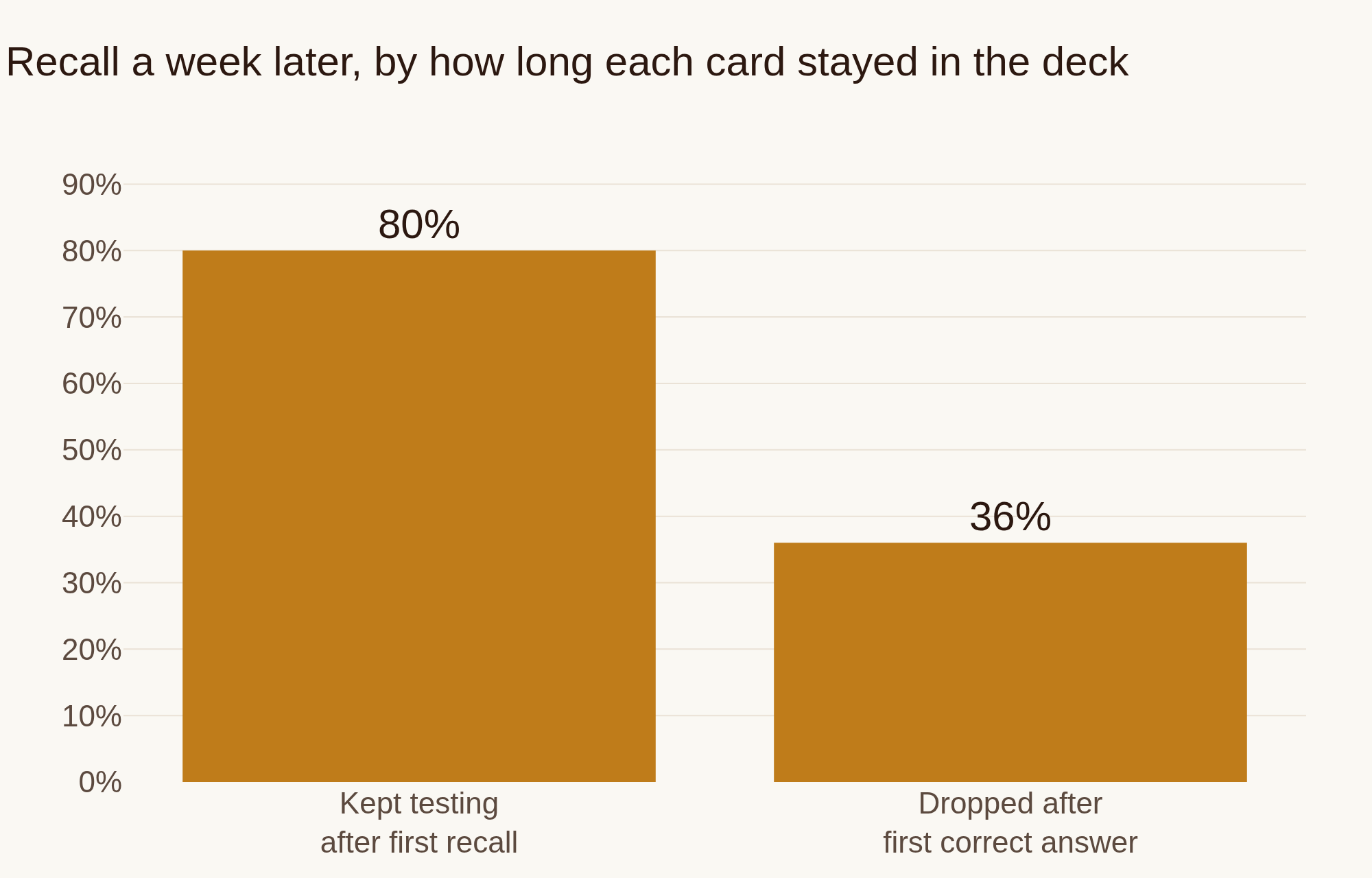
One fact per card, a real question on the front, and the cards you keep testing after you get them right.
Does the Cornell Note-Taking Method Actually Work?
The layout gets the attention. The cue column does the work.
How to Stop Procrastinating and Actually Start Studying
You're not missing willpower. Procrastination is your brain swapping a hard now for a worse later, and the fixes that work make starting feel smaller, not harder.
How to Memorize Fast for a Test
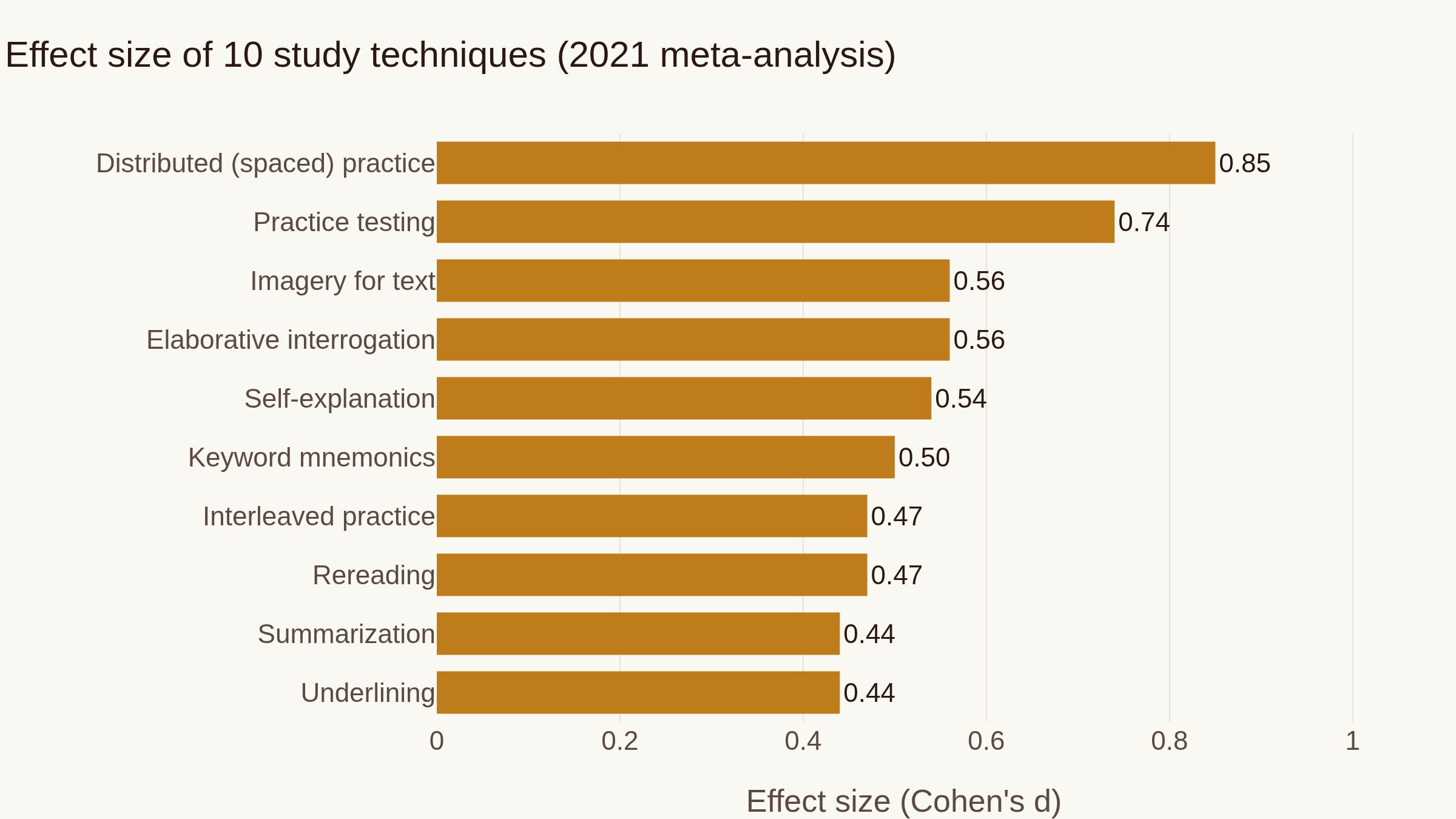
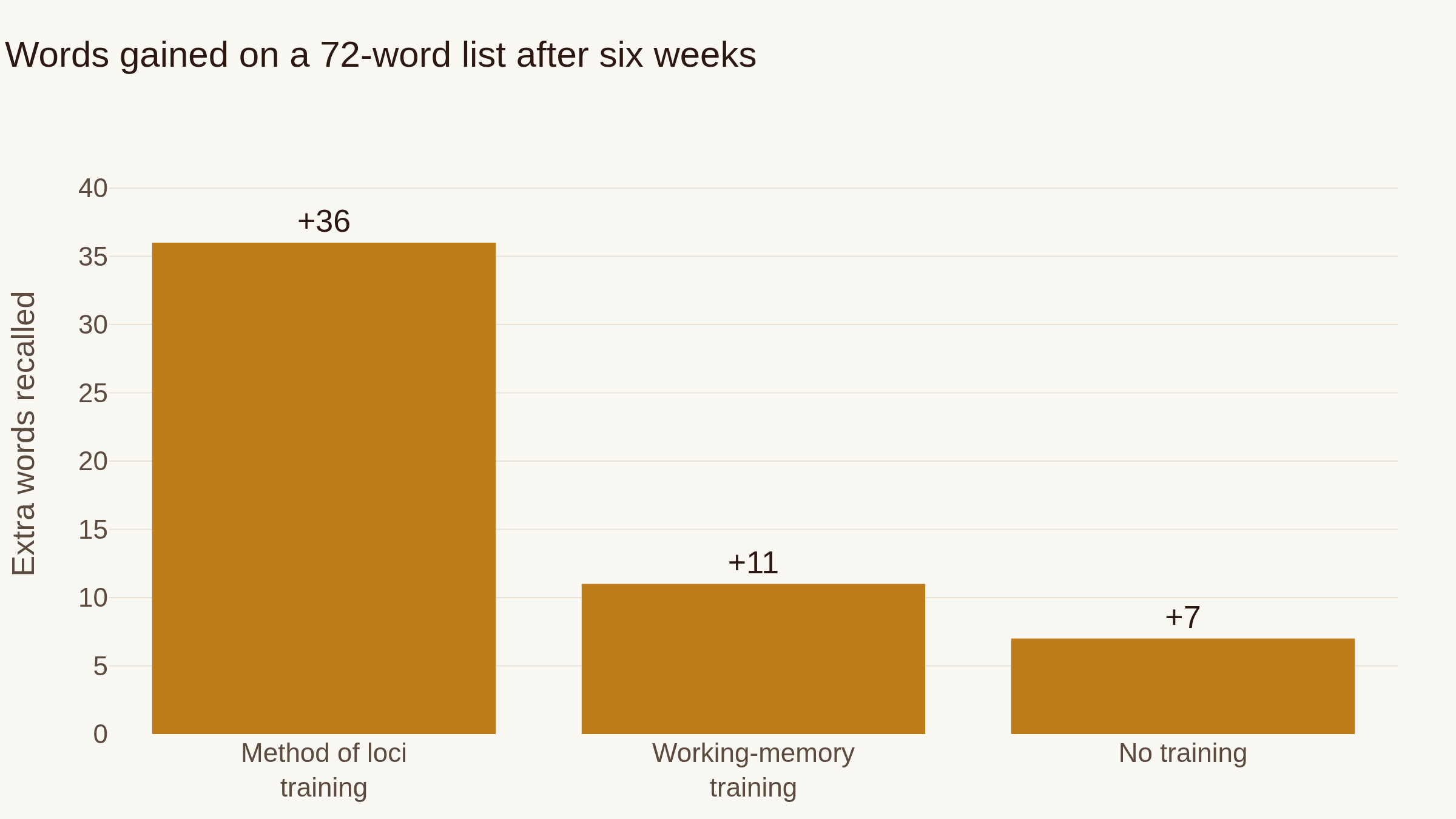
The trick lists lead with rereading and mnemonics. The two methods the research ranks highest are the boring ones, and they set your speed.
How to Use Practice Tests to Study
The test is the studying, not the check-up you do once you already know it. Here is how to build your own, space them out, and grade yourself honestly.
How to Read a Textbook So It Actually Sticks
SQ3R has five steps. Two of them move your exam score and most students skip both. Here is where to put your reading time.
Does Music Help You Study? What Actually Helps and What Hurts
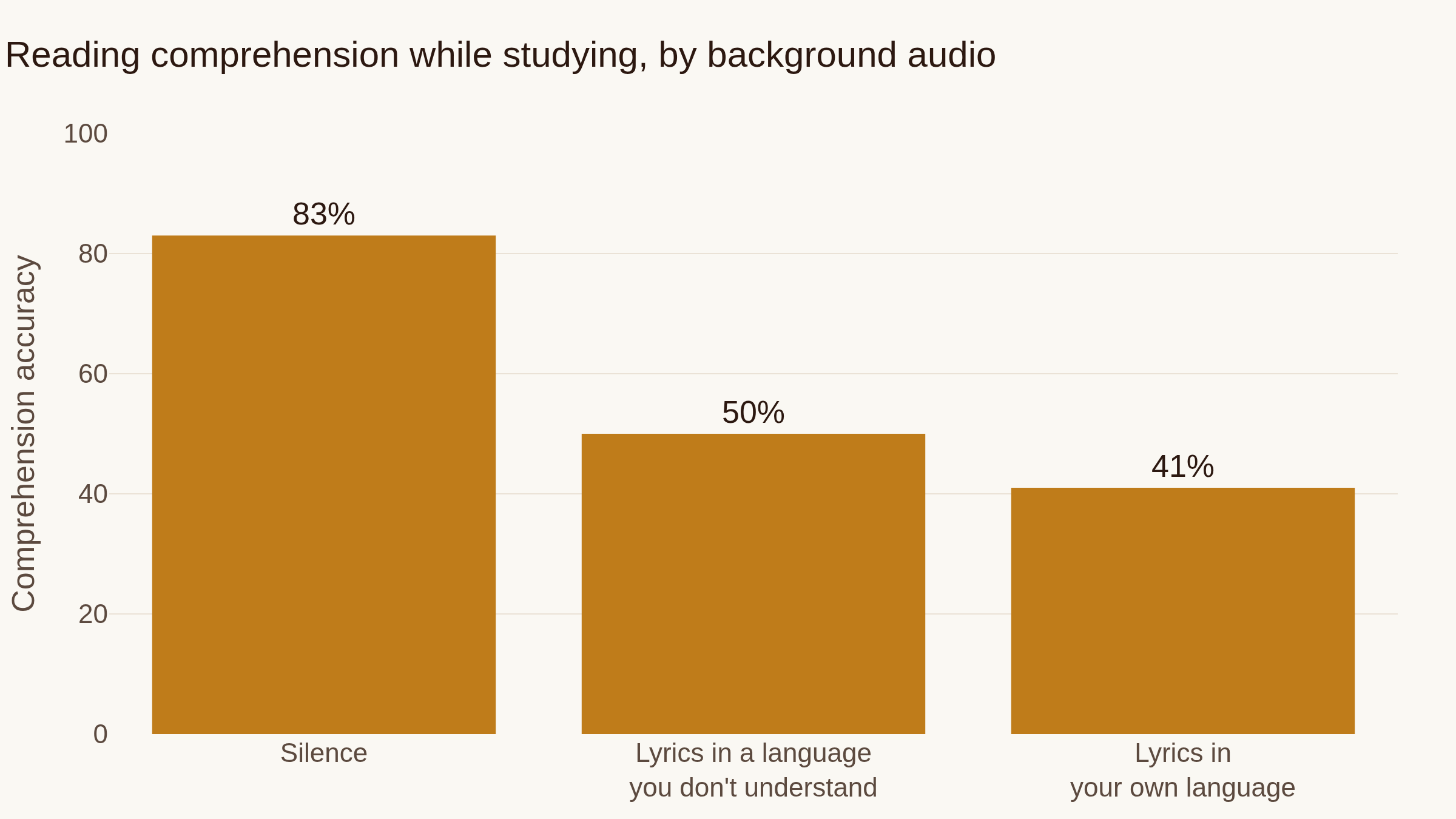
Song lyrics compete with the exact part of your brain you study with. Here is the task-by-task rule for what to play.
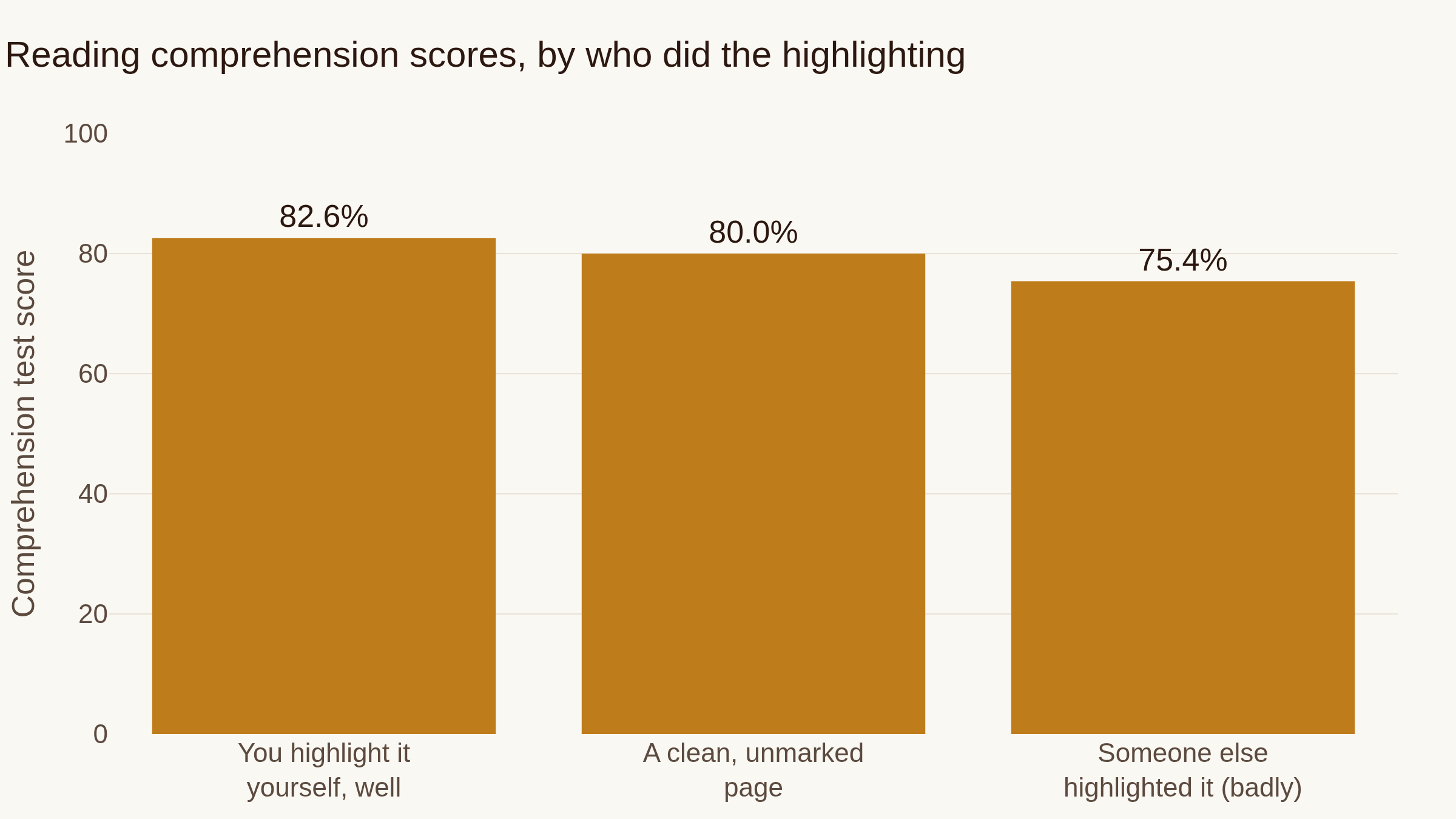
Does Highlighting Actually Help You Study?
Mostly no, and the reason is oddly specific: the yellow ink was never the point. Deciding what to mark is.
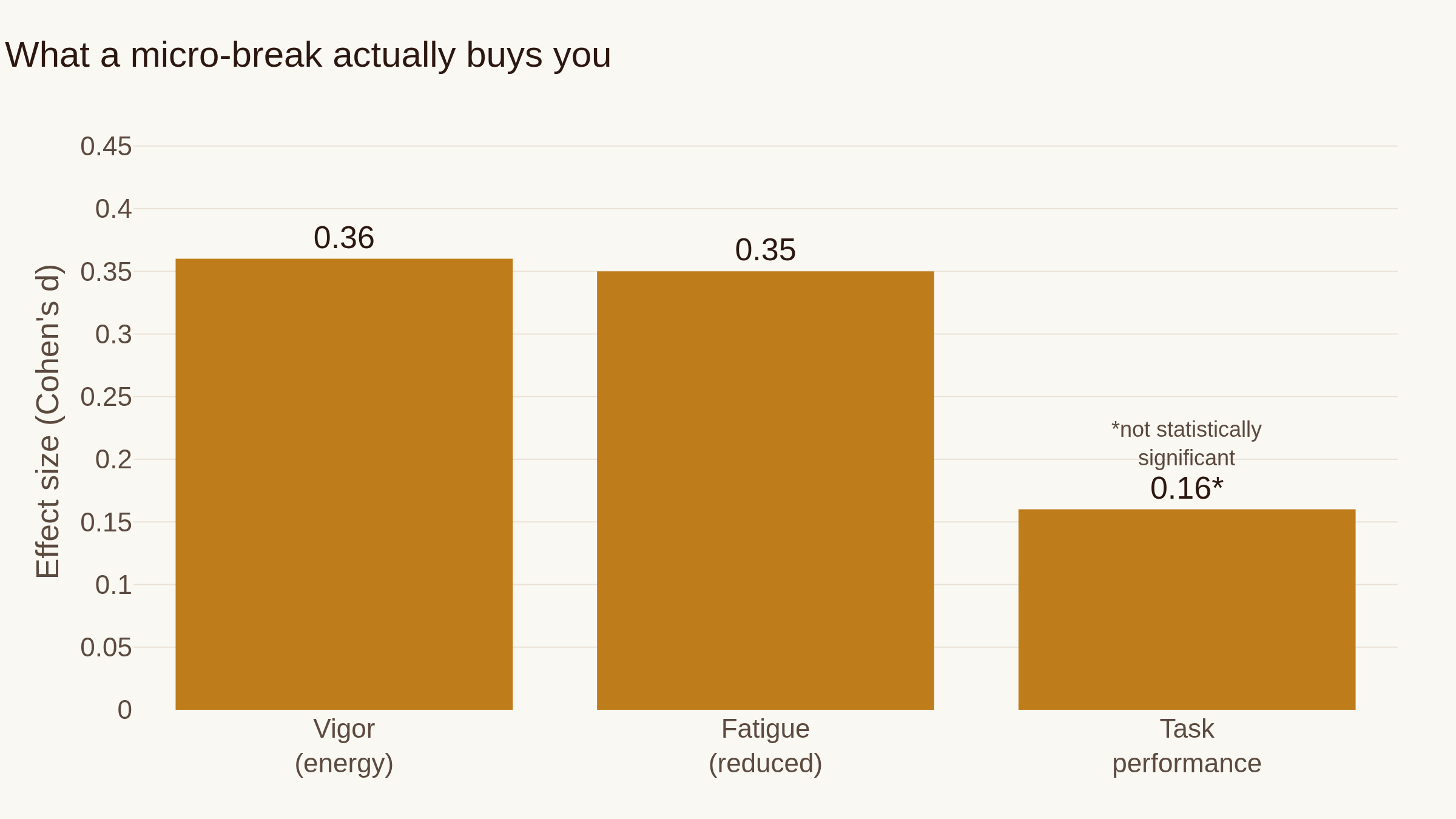
How Long Should a Study Session Be?
The research says the number matters less than two things nobody puts on the timer.
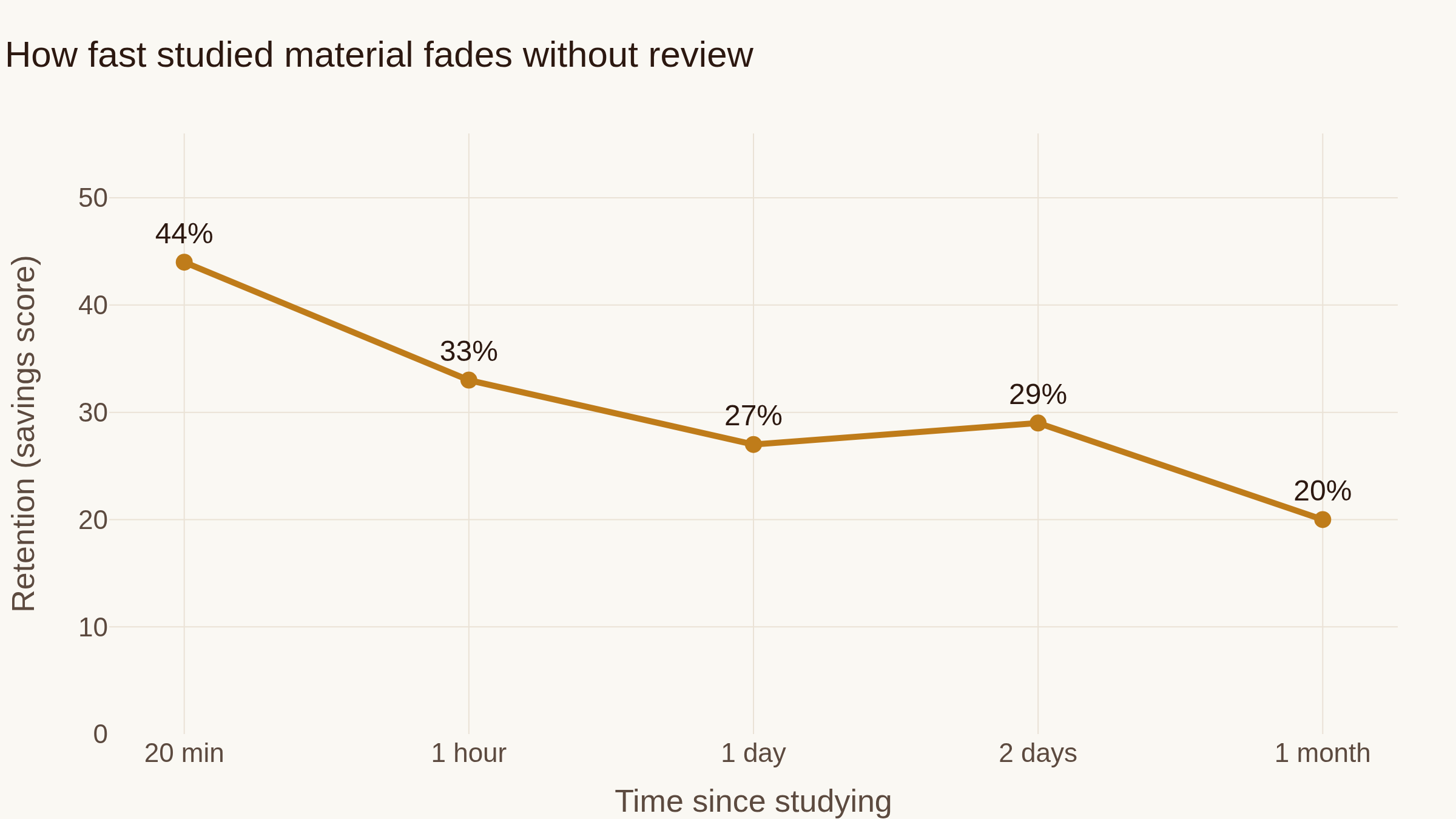
Why You Forget What You Studied (and How to Fix It)
Forgetting fast is normal and predictable. Here is what the forgetting curve actually shows, and the study routine that works with it instead of against it.
The Back-to-School Study Setup That Beats a Supply Run
The systems that actually hold up are not the ones you buy. They are the three you build in the quiet week before the semester lands.
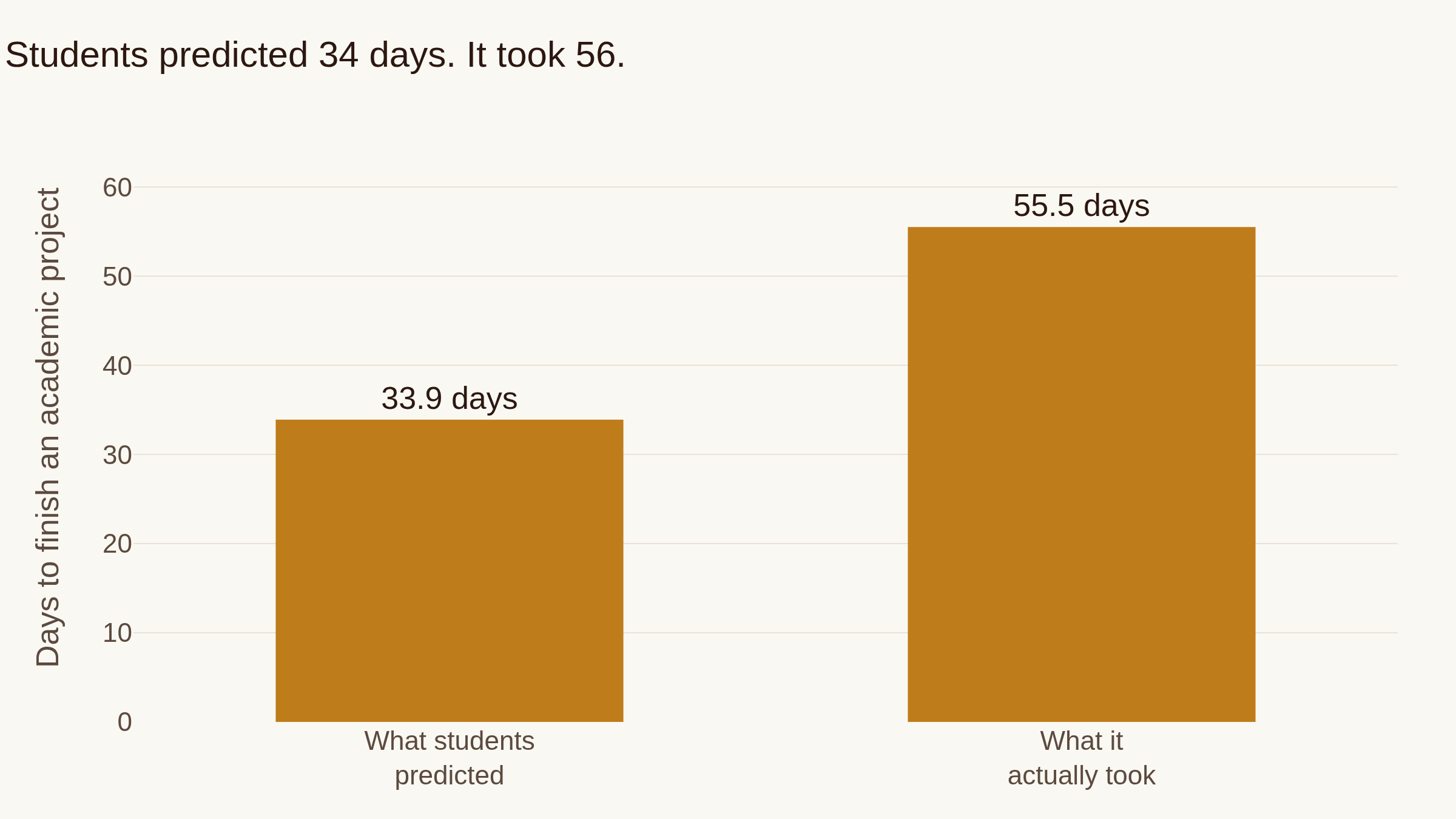
How to Catch Up When You're Behind in Your Classes
You cannot relearn a whole semester in a weekend, and you do not have to. The trick is deciding what to skip on purpose, then relearning the rest by testing yourself instead of rereading it.
How to Organize Class Notes by Subject
A review-ready filing system you can set up in one sitting.
How to Build a Study Schedule for Finals Week
Studying your subjects in the order the exams happen quietly crams every final but the first. Here is how to allocate the week instead.
How to Take Notes From Lecture Recordings Without Rewatching
Re-watching the whole thing is the slow way and the weak way. Watch once fast, write from memory, and let the recording patch only the gaps.
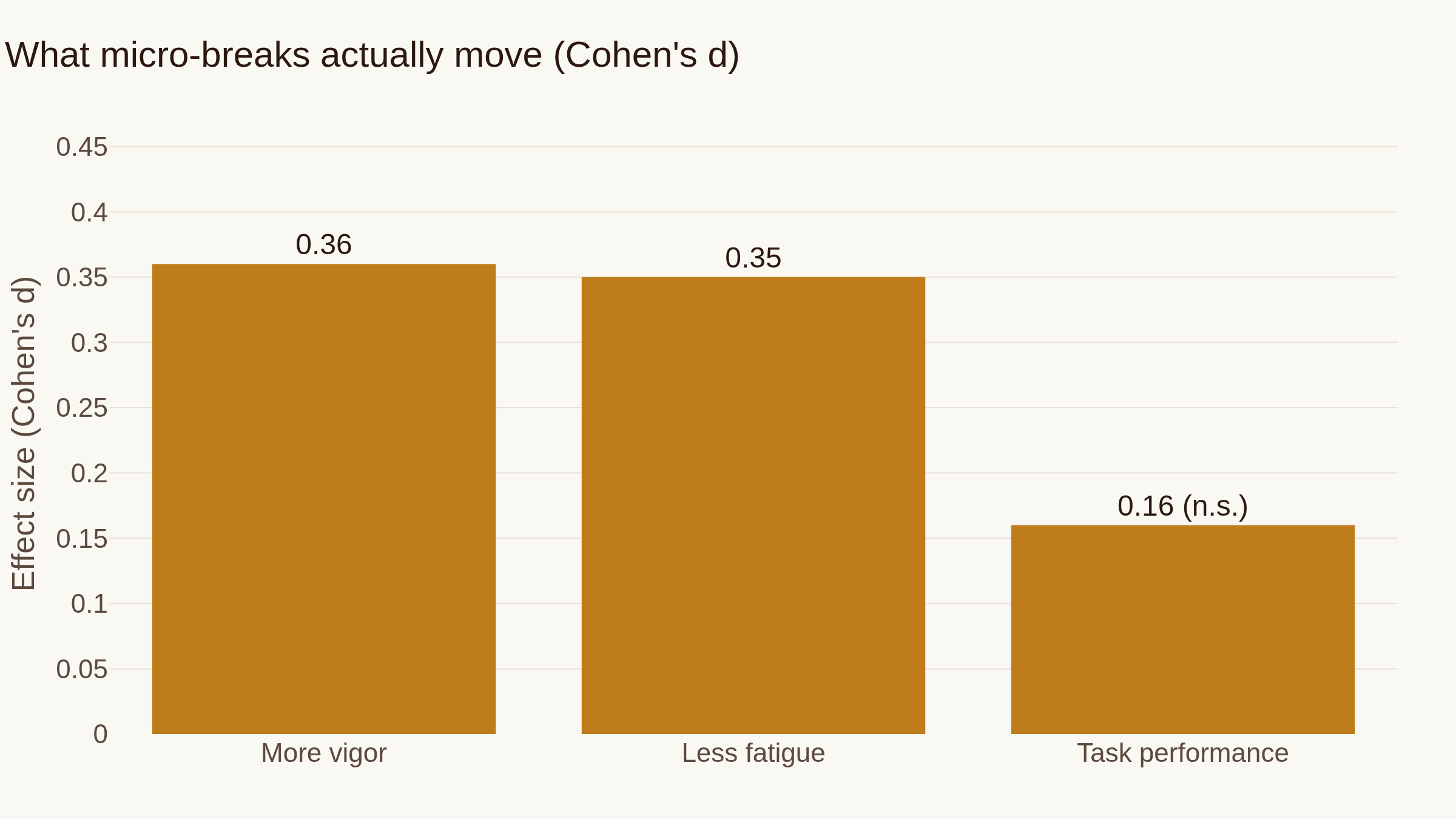
Does the Pomodoro Technique Actually Work for Studying?
It works for most students, but not because 25 minutes is magic. Here is what the timer is really doing, and how to set your own interval.
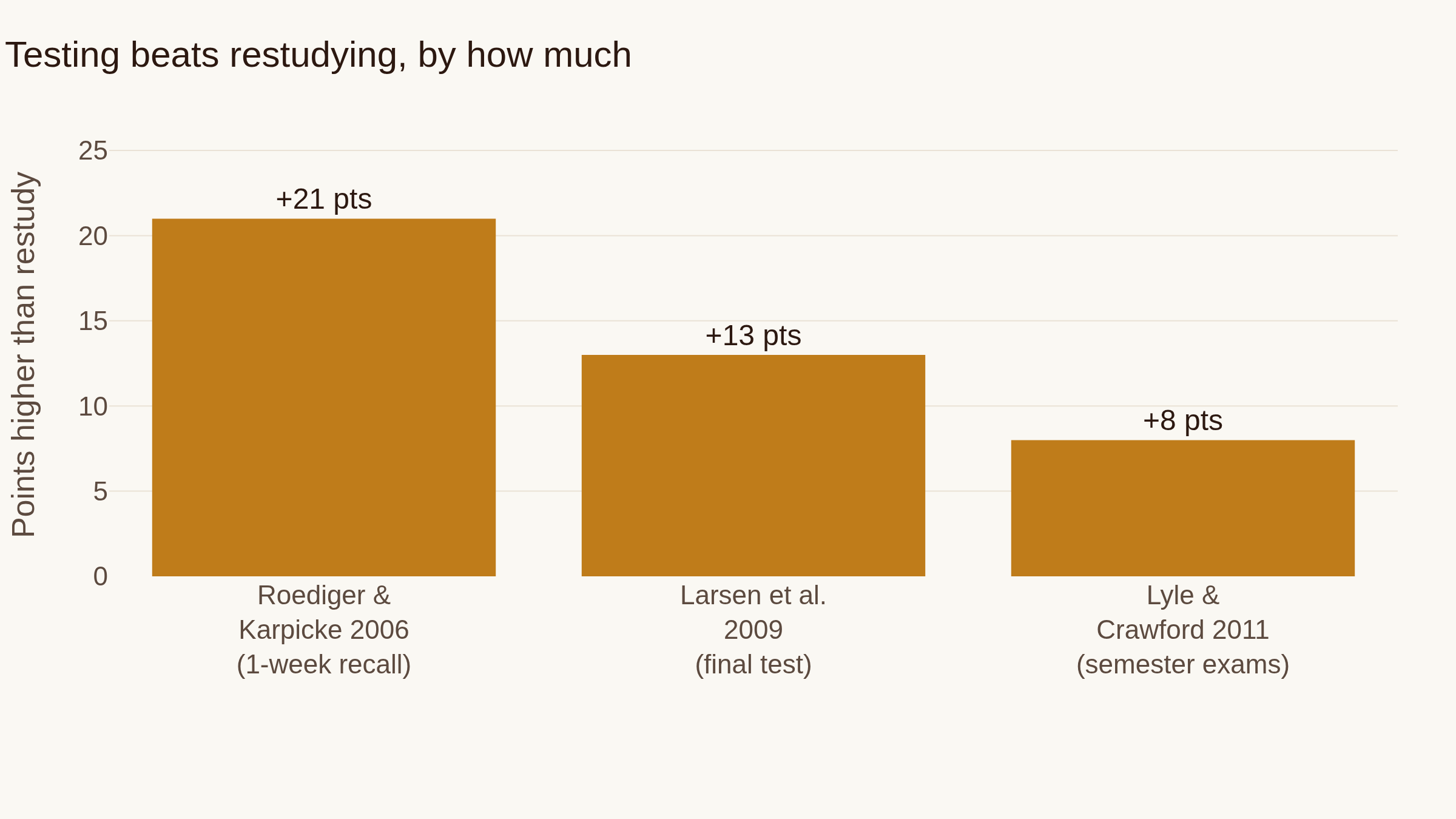
How to Study for Finals in 3 Days
Three days is enough for one exam. The catch is the order you run them in, and most plans get it backwards.
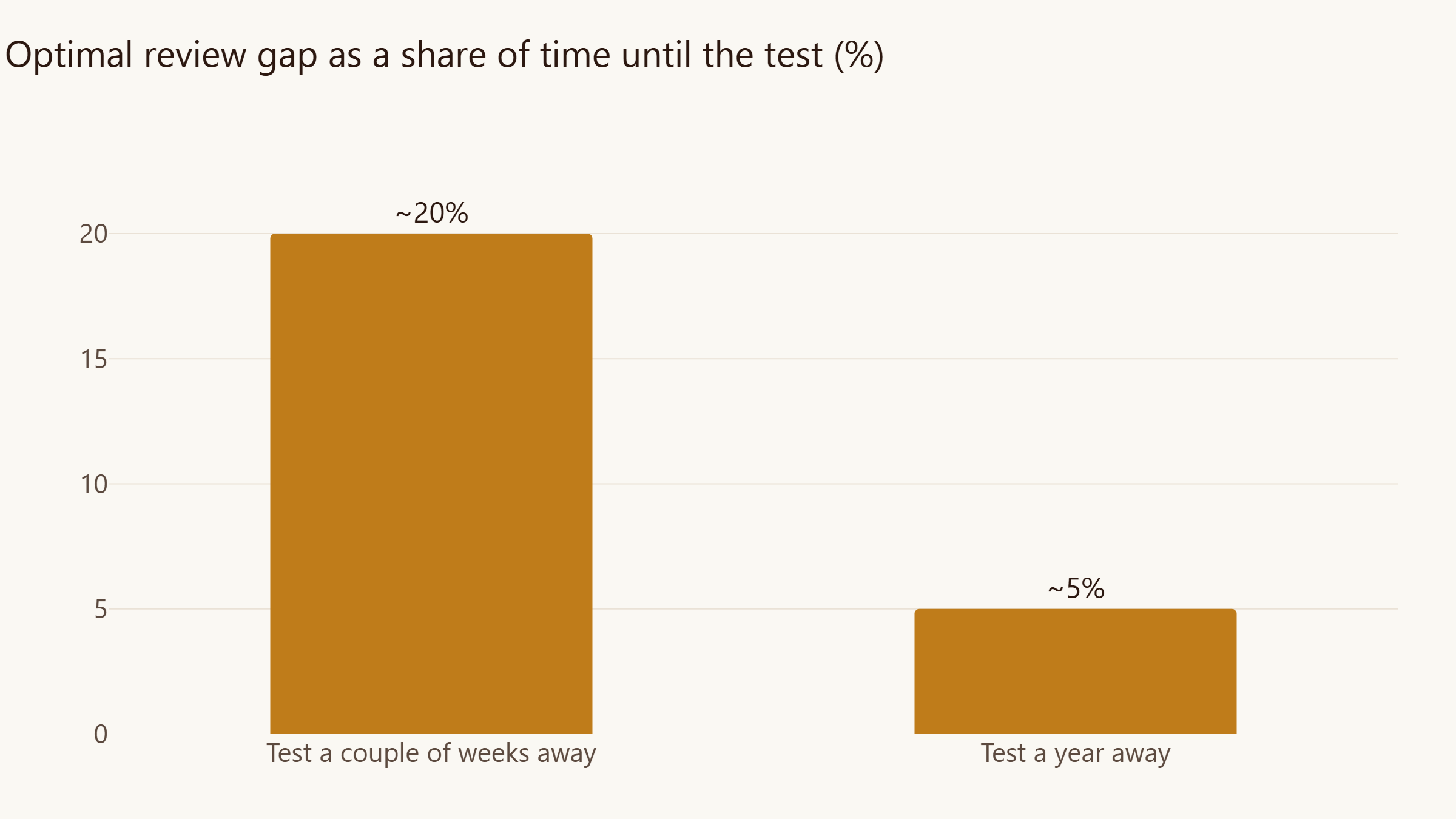
How to Build a Spaced Repetition Schedule Around Your Exam
Skip the fixed 1-3-7-14 calendar. The right intervals fall out of one number you already know: when your test is.
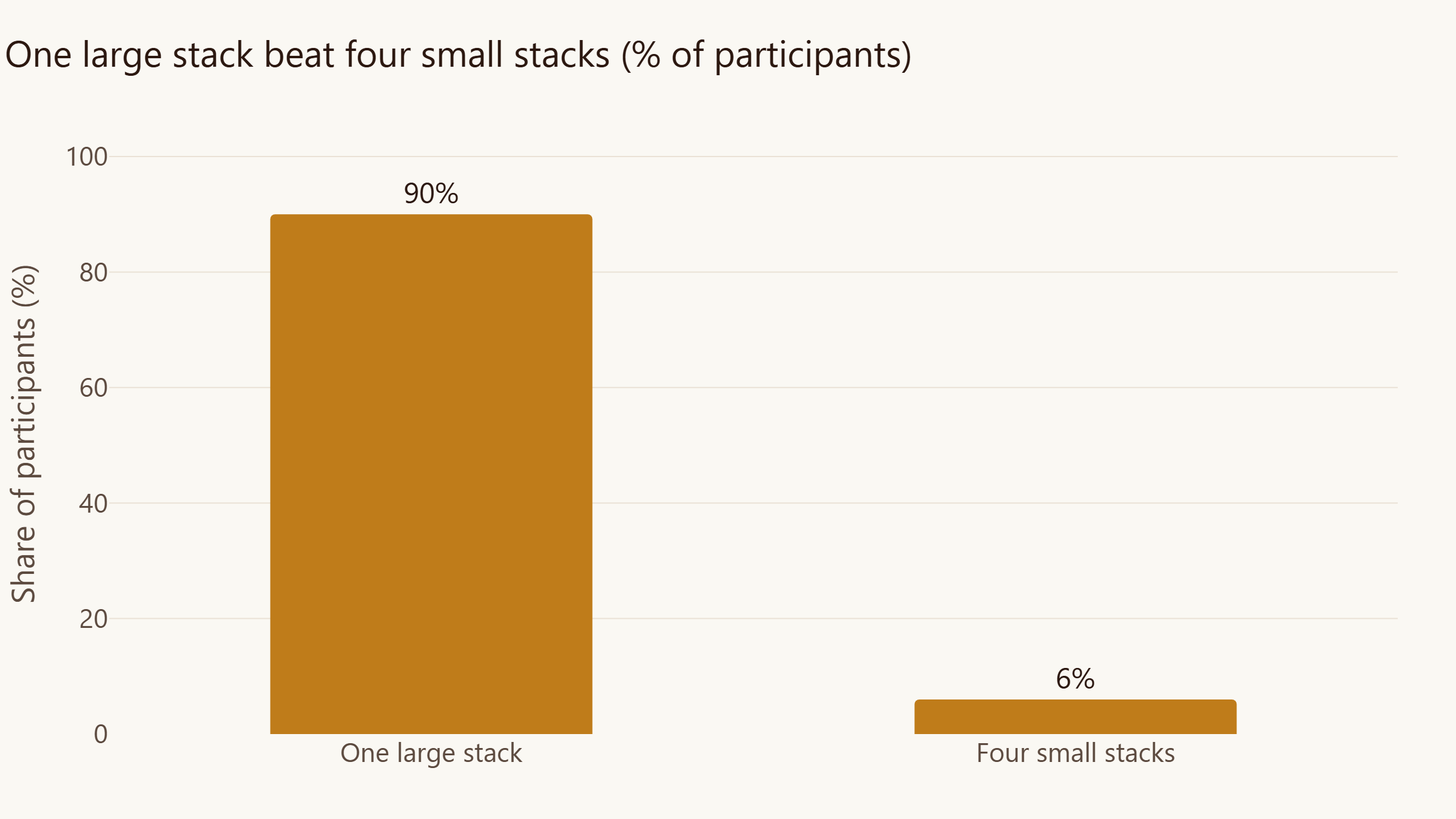
How Many Flashcards Should You Study at Once?
The number that decides your workload isn't how many you review in a sitting. It's how many new cards you add each day.
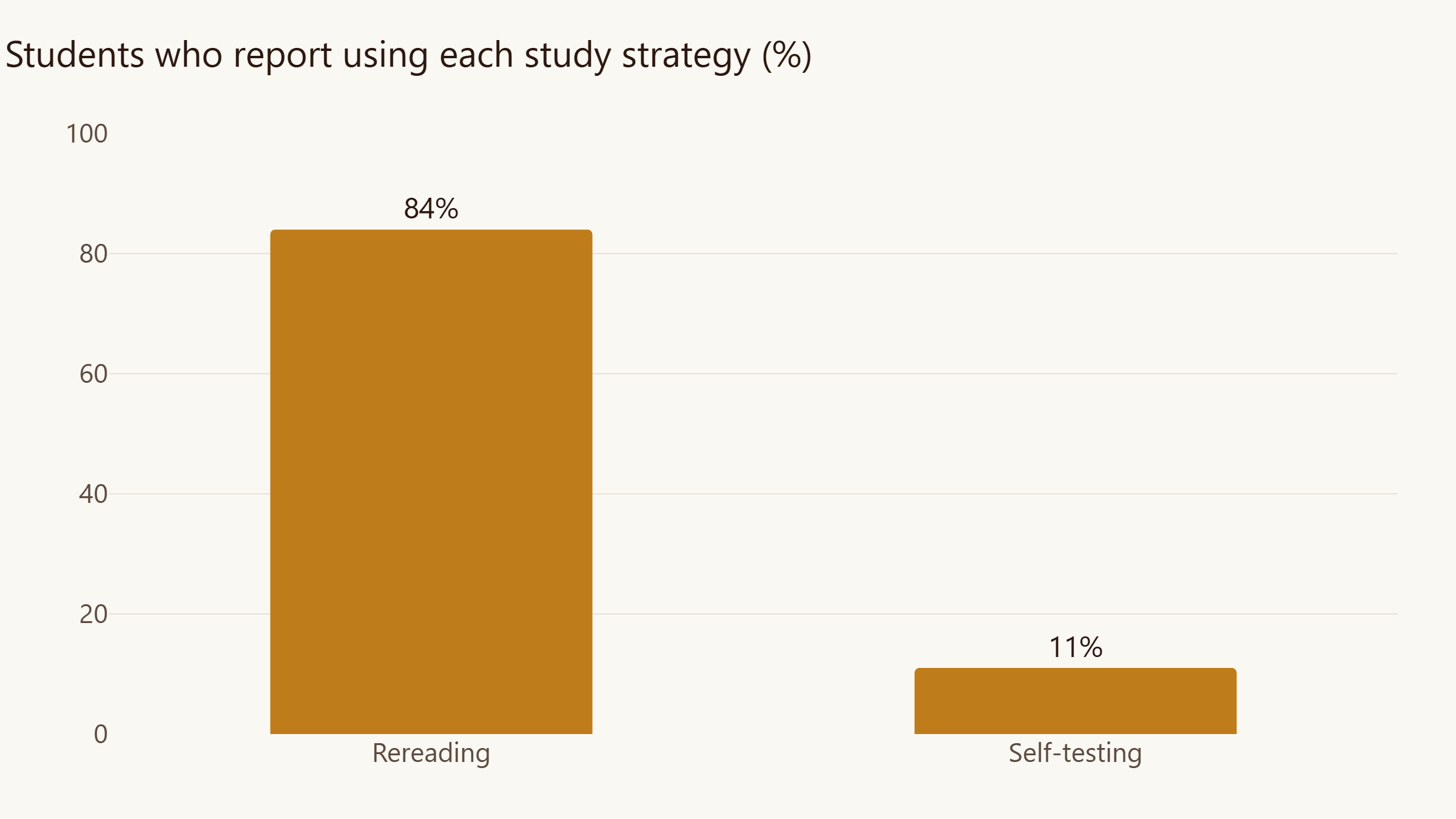
Active Recall vs. Rereading: What the Research Actually Shows
Rereading feels productive because of a five-minute illusion. Here's what the studies say happens after that window closes.